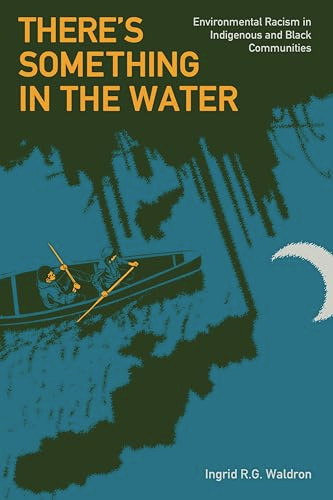






There’s Something In The Water

Ingrid Waldron

£15.95

|

1 in stock

1 in stock

In “There’s Something In The Water”, Ingrid R. G. Waldron examines the legacy of environmental racism and its health impacts in Indigenous and Black communities in Canada, using Nova Scotia as a case study, and the grassroots resistance activities by Indigenous and Black communities against the pollution and poisoning of their communities.
Using settler colonialism as the overarching theory, Waldron unpacks how environmental racism operates as a mechanism of erasure enabled by the intersecting dynamics of white supremacy, power, state-sanctioned racial violence, neoliberalism and racial capitalism in white settler societies. By and large, the environmental justice narrative in Nova Scotia fails to make race explicit, obscuring it within discussions on class, and this type of strategic inadvertence mutes the specificity of Mi’kmaq and African Nova Scotian experiences with racism and environmental hazards in Nova Scotia. By redefining the parameters of critique around the environmental justice narrative and movement in Nova Scotia and Canada, Waldron opens a space for a more critical dialogue on how environmental racism manifests itself within this intersectional context.
Waldron also illustrates the ways in which the effects of environmental racism are compounded by other forms of oppression to further dehumanize and harm communities already dealing with pre-existing vulnerabilities, such as long-standing social and economic inequality. Finally, Waldron documents the long history of struggle, resistance, and mobilizing in Indigenous and Black communities to address environmental racism.

There’s Something In The Water

Ingrid Waldron

£15.95

|

1 in stock

1 in stock

In “There’s Something In The Water”, Ingrid R. G. Waldron examines the legacy of environmental racism and its health impacts in Indigenous and Black communities in Canada, using Nova Scotia as a case study, and the grassroots resistance activities by Indigenous and Black communities against the pollution and poisoning of their communities.
Using settler colonialism as the overarching theory, Waldron unpacks how environmental racism operates as a mechanism of erasure enabled by the intersecting dynamics of white supremacy, power, state-sanctioned racial violence, neoliberalism and racial capitalism in white settler societies. By and large, the environmental justice narrative in Nova Scotia fails to make race explicit, obscuring it within discussions on class, and this type of strategic inadvertence mutes the specificity of Mi’kmaq and African Nova Scotian experiences with racism and environmental hazards in Nova Scotia. By redefining the parameters of critique around the environmental justice narrative and movement in Nova Scotia and Canada, Waldron opens a space for a more critical dialogue on how environmental racism manifests itself within this intersectional context.
Waldron also illustrates the ways in which the effects of environmental racism are compounded by other forms of oppression to further dehumanize and harm communities already dealing with pre-existing vulnerabilities, such as long-standing social and economic inequality. Finally, Waldron documents the long history of struggle, resistance, and mobilizing in Indigenous and Black communities to address environmental racism.

Recommended

Freedom

Bookshop

Angel Alley
84b Whitechapel High St
London E1 7QX

Opening hours: 12pm to 6pm

New in

Latest

Subscribe to Freedom anarchist journal, sustain radical publishing and support independent media.

SUBSCRIBE

AND DONATE

Economics

Philosophy and Theory

something in

particular?

Not everything available in the physical bookshop is currently listed online. If you are searching for a particular book, periodical, or other product please get in touch and we may be able to source it for you