
|
The Anarchists of Dune
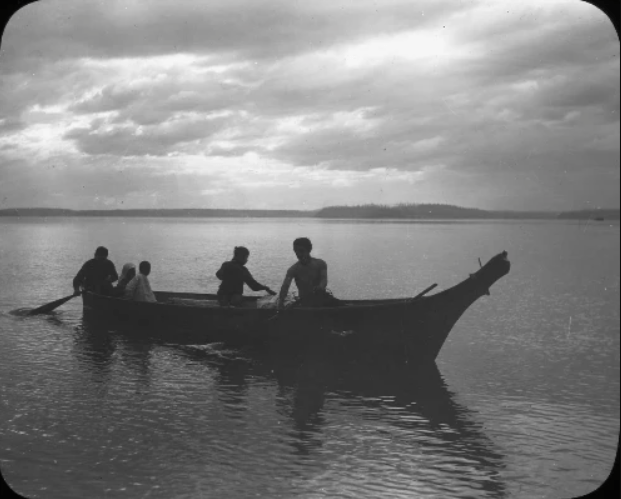
Frank Herbert, the author of Dune, lived the happiest parts of his childhood in a failed socialist colony called Burley, located along the Salish Sea near the city of Tacoma, Washington.
Transmetropolitan Review
14 April 2024
from The Transmetropolitan Review
“The people who can destroy a thing, they control it.”
-Frank Herbert, Dune, 1965
Across the world, the movie-watching public will soon behold the Fremen of Dune sack and destroy the Empire, starting on their homeworld of Arrakis. This irresistible moment, where the rebels actually win, is sure to sink into the mass-public consciousness, but despite all the Arabic names and parallels between spice and petroleum, the true story of the Fremen deserves to be told, especially now, given what’s at stake.



Frank Herbert’s grandfather Otto had been a socialist and follower of Eugene Debs, and he moved his family to Burley Colony in 1905, just as the community was falling apart. Given how close Burley was to Home, the Herbert family learned much about their anarchist neighbours, especially when several of them were arrested during a nude bathing scandal. The Herbert family was in Burley from 1905 to 1919, the year Home ceased to exist as an anarchist community, and they were nearby for all the major intrigue and conspiracy that took place there. Given young Frank Herbert’s love for his grandfather Otto and grandmother Mary, both socialists, it’s likely he cherished their stories from the old days and sought them out over stories from his father, who became a cop.

Born in Tacoma in 1920, Frank Herbert moved to Burley with his family in 1928, although the young boy was already familiar with the region, having gone on many family trips. Like the anarchists of Home, young Frank woke up in the frosty time before dawn, he milked the cow, collected eggs and fed the pigs, just as his family had a large vegetable garden, with corn, peas, beans, carrots, lettuce and other crops. This was the type of self-sufficient, backwoods living Herbert shared with the anarchists of Home, the living legends of their sleepy region.
Just like them, young Frank fished for his supper and especially liked to fish in Burley Creek, which was loaded with brook trout. In the fall, salmon were so plentiful that they would be caught with bare hands. There were many smokehouses in the area, some dating back to the days of Burley Colony. It was a picturesque creek, winding through a forest of cedar, alder and maple and falling across a sequence of rocky beaches. The anarchists of Home shared this primordial landscape, and similar to them, young Frank smoked much of the salmon he caught and took it to school for lunch, along with fruits, vegetables and hard-boiled eggs from the family farm. Even in regards to hunting deer, Frank Herbert would recall, there was no sport to it. They just went out and got meat for the family.
There was still dancing in Home when Frank was growing up there, and not only was he known to canoe down there, his parents moved from Burley in 1931 and opened a dance hall on old Highway 99 near Seattle, a speakeasy that made a lot of money. Keep in my mind, Frank’s father was a former cop, and he quit to become a boot-legger, but he and Frank’s mother were pushed out of the dance-hall business by their partners, and by 1933, the family was broke and living near Tacoma to be near their family.

This allowed young Frank to return to Burley where he sought refuge in his canoe, and during one journey, he met a member of the Hoh tribe, known as Indian Henry, and these two became good friends. Similarly, the anarchists of Home had known an indigenous Squaxin who was called Indian Jim, and just like Frank, the anarchists would meet the natives as they paddled around in their boats and canoes, exchanging much local knowledge. All this to say, Frank Herbert was raised very much like the anarchists of Home, and while the socialist colony had fully collapsed by 1920, there were still many anarchists who lived in Home in the 1930s, and Frank moved among them.
Frank’s dad eventually returned to being a cop just as his alcoholism got worse, and soon enough, the wild child raised by socialists was consumed by work and school in Tacoma, where he lived the big city life and left behind his rugged childhood. Without doubt, Frank knew of the anarchist rebels hidden out in the woods, having grown up hearing tales of explosions, guns, and arson, and if the Fremen are meant to represent anyone, its those hard-working, do-it-yourself, bomb-throwing anarchists of Home, and just like the Fremen, they had suffered years of defeat and repression at the hands of the US empire. With such an irresponsible cop father, Frank Herbert held an eternal soft spot for those anarchists who lived just south of Burley, just as he encoded his own love for his grandfather’s old brand of socialism in his writing.
In the novel Dune, a character named Duncan Idaho is sent to make an alliance with the Fremen, something he barely achieved with these distrusting rebels. Many have laughed and wondered why a character from the year 10,191 would have the last name Idaho, but back in the old days, Idaho was where the crazy bomb throwing miners lived, the ones who blasted apart their ex-governor in 1905. It was a place where Eugene Debs had called a rebel army to invade Boise, a place where rebels had hijacked trains and gone mine to mine, blowing up their shafts with dynamite. Before it was known as a racist, conservative hotbed, Idaho was where the hardest, fiercest rebels were known to reside, and young Frank probably learned of this Idaho from his socialist grandfather Otto. Fittingly, Duncan Idaho is not only the best fighter, the Fremen naturally trusts him for his dignity and honesty.

In the end, Frank Herbert’s Dune and Dune Messiah serve up some of the oldest anarchist propaganda, not only by commenting on the corrupting influence of centralised power but by spending nearly 1,000 pages to reaffirm one of anarchism’s oldest slogans: no one is fit to rule, and no one deserves to be a slave. Herbert’s natural sympathy was with the rebels, the underdogs, the Fremen, the anarchists of Home, and that’s why the upcoming cinematic rendering of the Empire’s defeat will be so gratifying, as is being teased out in the official trailers. However, Dune is only one half of Herbert’s initial warning, or act of prediction, as he called it, and the second half is much darker
Nevertheless, the Fremen are meant to represent the best of those who lived in that isolated backwater of the Salish Sea, the hardcore anarchists who made everything for themselves, who organized attacks on the empire themselves, who never stopped fighting, not in the 1920s, not in the 1960s, and not today in the 2020s. Without doubt, the anarchists of Dune are the Fremen of Home, and their backwater paradise of total freedom, that violent, nomadic utopia, is what many characters long for when the state becomes too powerful, those simpler days when one could wander forever in a land that was a part of them, just as they were a part of the land, however hostile and uncompromising it may be.
Death To The Empire!
Long Live The Fighters!
Long Live Anarchy!
Film








Freedom
Bookshop
Communities

New In








Freedom Press

















Subscribe to Freedom anarchist journal, sustain radical publishing and support independent media.
SUBSCRIBE
AND DONATE
Latest
Andy Burnham’s antidote fallacy
For all his talk of devolution, the PM’s reforms are likely to embed the state ever more intrusively in our lives
Jon Bigger
|
16 September 2026
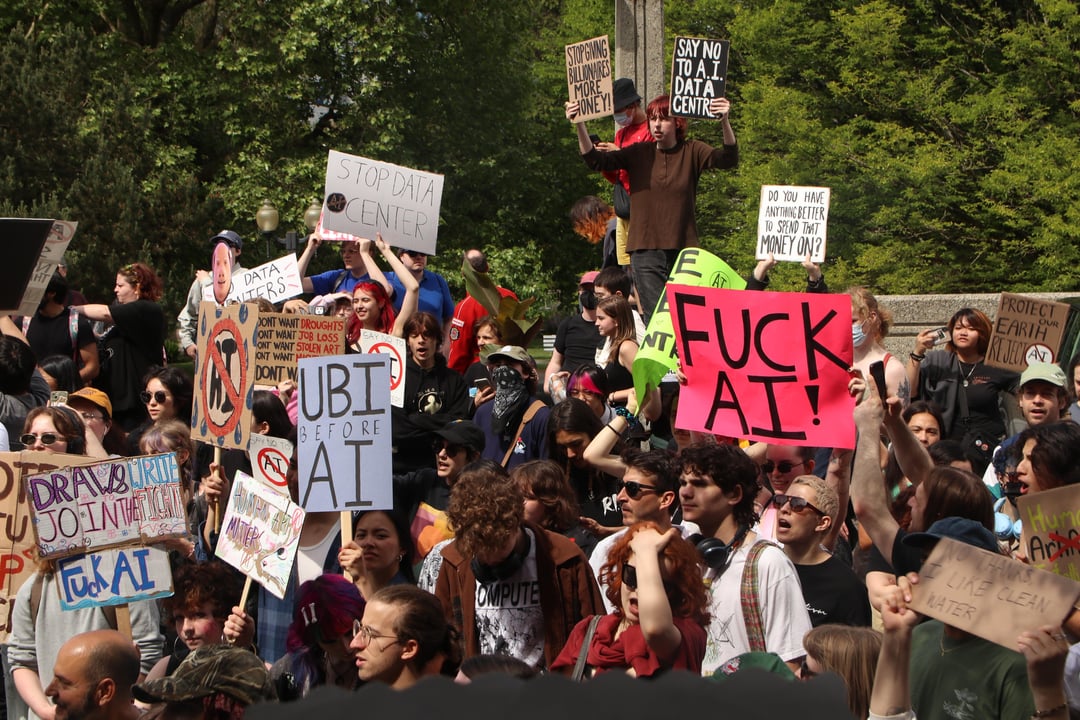
Climate activists confront data centres
The surge of AI‑powered data centres is straining the electric grid, draining water supplies, and forcing a new wave of climate‑justice activism
Joel Sucher
Browse over a century of anarchist commentary and reporting from the Freedom digital archive
EXPLORE THE
Archives