
|
Solidarity for West Papua is overdue
Peter Ó Máille
21 December 2019
“Those Papuans of yours are some 700,000 and living in the Stone Age” said John F Kennedy in 1963, as he approved an agreement to hand over control of West Papua to Indonesia, ceded from the Dutch.
That figure the US president so glibly negated an entire people with was a few hundred thousand off the mark and rife with cultural supremacy and bigotry—reflecting former imperial influences and rising Indonesian intolerance.
The Papuans comprise several Melanesian ethnic groups sharing a heritage which is distinct from Indonesia’s Polynesian and Micronesian peoples. Their history on the island goes back 50,000 years with rich cultures, languages and traditions.
When their lands were summarily handed from the Netherlands to the Indonesians in a deal aimed at solving Dutch colonial problems and US fears over Soviet influence in one stroke, their situation went from bad to worse. The Indonesian State set about pillaging the resource-rich region and suppressed indigenous communities with an iron fist. Over the next 40 years more than 500,000 people were murdered at the hands of the Indonesian State in what has been termed “The Neglected Genocide”.
Educated Papuans were murdered and villages napalmed using British and US-made weapons. It was a brutal slaughter. Melanesian girls were tortured, raped and murdered en mass. Elders were put in helicopters and kicked out mid-air in front of their families. Anyone detained faced torture as their entire villages were bombed from the air.
Natural resources were quickly sold off to British and US interests, most infamously the Grasberg gold and copper mine digging deep into sacred lands which was handed to Freeport-McMoran in 1967. Forests were torn down and farming lands seized. Through the 1970s and ’80s there was a vast programme to culturally and genetically cleanse West Papua of Melanesian influence.
In 1969, the UN insisted on an election so Melanesians could democratically decide their future, dubbed the “The Act of Choice”. The reality was that 1,025 men were rounded up at gunpoint and told that if they voted for independence they would be committing treason. Indonesia won by a landslide. Papuans call this artificial plebiscite “The Act of No Choice”.
The world remained silent. Indonesia had successfully put down Communist and Islamic insurgencies and protected corporate profits, why rock the boat?
Meanwhile the Melanesians found themselves in a guerilla war. This came to a head when the Presidium Council of West Papua chairman Theys Eluay was abducted and murdered by Kopassus Special forces officers in 2001. Eluay was a controversial figure who utilised a militant force of nationalistic young Papuans in the Satgas Papua (Task Force) to maintain order and secure villages from violent provocateurs. He also allegedly received funds from Pancasila Youth, an Indonesian right-wing paramilitary group.
This resulted in a period of relative liberty, with Melanesian forces displaying the Papuan Morning Star flag (a criminal offence risking 15 years in jail) and holding public demonstrations of strength, but once Eluay was killed and buried there was a re-escalation of Indonesian pressure.
The struggle against colonialism was not simply defined by Theys Eluay. Independence protests and marches roared into life after his murder, from civil demonstrations and protest to militant action, The response was a State crackdown arresting as many leaders as possible. One such man was Koteka Tribal Assembly (Demmak) general secretary Benny Wenda who was arrested in 2002 for allegedly leading a procession of people in an independence rally. Subject to death threats and facing 25 years in jail, he escaped prison while on trial and fled the country. Eventually finding a home in Britain, he became a leading spokesperson for the “Free West Papua Campaign” which works to bring awareness of the issue to the world stage.
Over the next ten years he would highlight the plight of West Papua as his people would time and time again face crackdowns and brutality. During this time Rio Tinto and BP consolidated their interests, bringing with it low pay and vast ecological damage which saw a wave of cross cultural worker organising, again violently repressed.. The slow motion ethnic cleaning of West Papua continued, with the Indonesian government obsessively hunting down members of the Free Papua Movement (OPM) which they claim is a global terrorist network.
In 2013 the aboriginal community caught the world’s attention with a “Freedom Flotilla” in the form of two ketchs named The Pog and Trudy which sailed from Australia to West Papua. Indigenous elder Kevin Buzzacott of Arabuna in South Australia sought to deliver sacred water from the mound spring in Arabuna, alongside ashes from various aboriginal embassies around Australia, to West Papuan elders to reconnect the land and people who had been joined by a vast land bridge some 10,000 years before.
In response the Indonesians arrested four community leaders who had attended a church meeting to pray for the flotilla. They were charged with treason and faced up to 20 years in prison.
Though the Trudy was forced to return early for the safety of those onboard, The Pog completed the journey and was met by two dingies off the coast of West Papua, filled with activists and community leaders. The following days saw house to house searches for the organisers by the police force, leading several people—including a pregnant woman and children—to flee for their lives. This beautiful action of solidarity was not in vain, it placed West Papua in the global spotlight, with Vanuatu Prime Minister Moana Carcasses Kalosil speaking in support of international action for West Papua at the UN General Assembly.
The Indonesian State however continued regardless with its reign of terror, outlawing journalists and silencing activists despite persistent large scale demonstrations for independence.
On August 17th 2019 a large group of Indonesians, including members of the military, accused Papuan students of destroying an Indonesian national flag and held them in siege, locked in their dormitory under a hail of abuse and bricks. When police turned up they demanded the students come out, before shooting tear gas into the building and arresting 43. All were released the day after, no evidence of any crime was found.
Video footage of the event spread across West Papua. On watching the students taunted with calls of “monkey!” “Dog!” and “Pig!” spontaneous protests took place nationwide, including in the capital Jakarta, flying the “Morning Star” flag and holding placards with slogans such as “Free Papua, this is what the monkeys want.” By August 22nd the local parliament building in Manokwari had been torched along with prisons in Sorong and Jayapura.
September started with leaked footage of security forces opening fire on Papuan students in Deiyai, West Papua, as they held their hands up, with at least eight being killed and 15 wounded. This has only seen protests swell even further with Melanesians going into full revolt, joined by a large part of the student population. Since September 23rd there have been huge demonstrations in nearly every province with numbers in the tens of thousands. Their actions are unified by the following major demands:
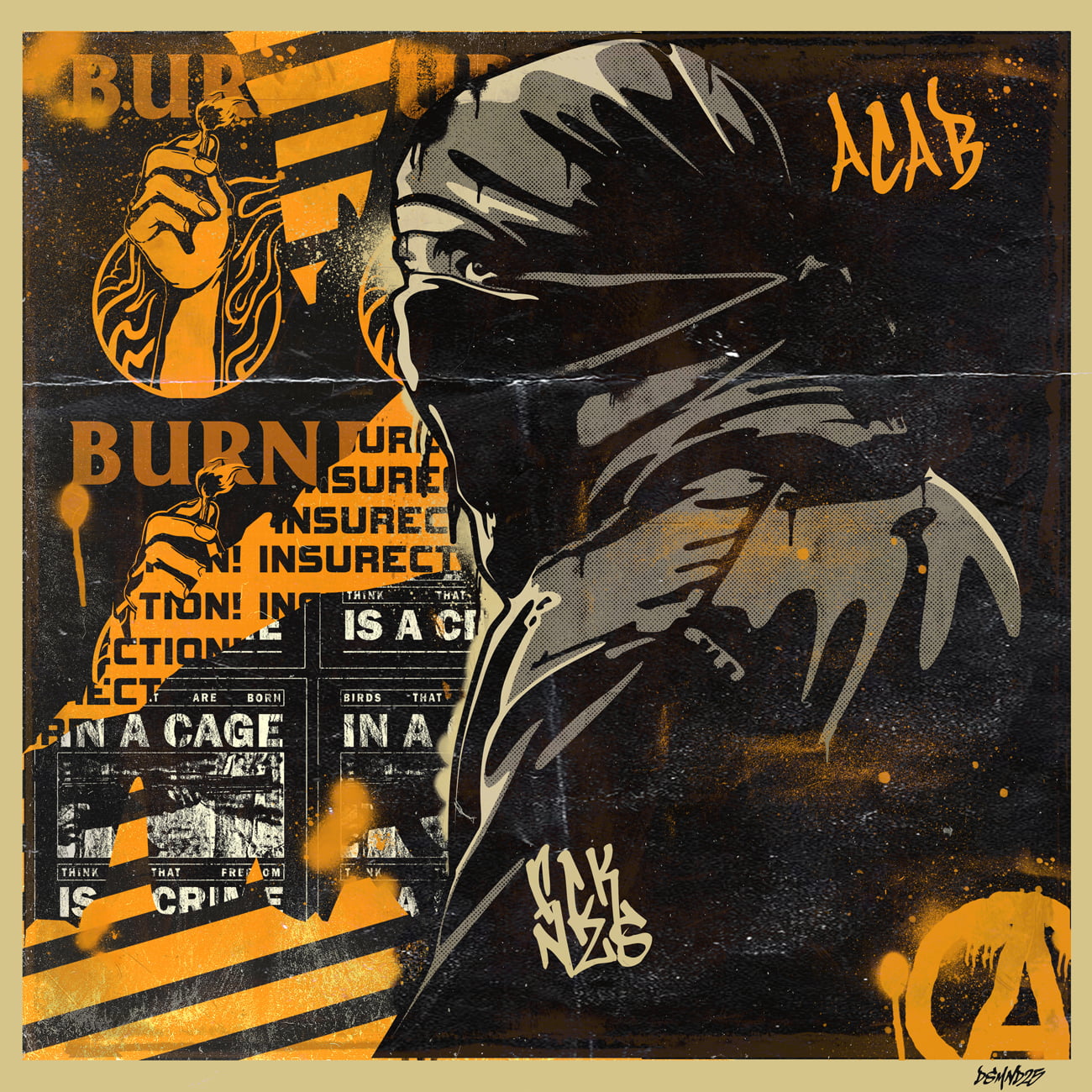
Pic provided by Anzi Matta—check out their Patreon here. This article was written for the Winter 2019/20 issue of Freedom Journal.
- Reject the Criminal Code Bill
- Revoke legal reforms weakening the Corruption Eradication Commission (KPK)
- Pass a Bill against sexual violence
- Remove problematic KPK leaders picked by the government.
- Ban Indonesia’s military and national police personnel from holding official civilian posts
- End militarism in Papua and other regions and immediately free Papuan political prisoners
- End prosecution of all activists
- End the burning of forests in Kalimantan and Sumatra and punish corporations responsible
- Resolve human rights violations and put human rights violators on trial
- Restore rights of victims
Pic provided by Anzi Matta—check out their Patreon here. This article was written for the Winter 2019/20 issue of Freedom Journal.
History







Freedom
Bookshop
History

Anarchism: Last hope for the Environment
Against a state that will never resolve climate chaos, and its violence which force cannot overthrow today, what remains for environmentalists?
Vincent Lu
New In





Freedom Press


Subscribe to Freedom anarchist journal, sustain radical publishing and support independent media.
SUBSCRIBE
AND DONATE
Latest
Greek prisoners release: Selective American condemnation is telling
Two long-term prisoners were released in Greece this week: a prominent neo-nazi leader, and an anarchist. Only one of the two was singled out by the US ambassador.
Neil Middleton
|
19 September 2026
“To make the Earth a Common Treasury”
Marking 350 years since the death of the English revolutionary Digger Gerrard Winstanley (1609-1676)
Robert Graham
Browse over a century of anarchist commentary and reporting from the Freedom digital archive
EXPLORE THE
Archives