
|
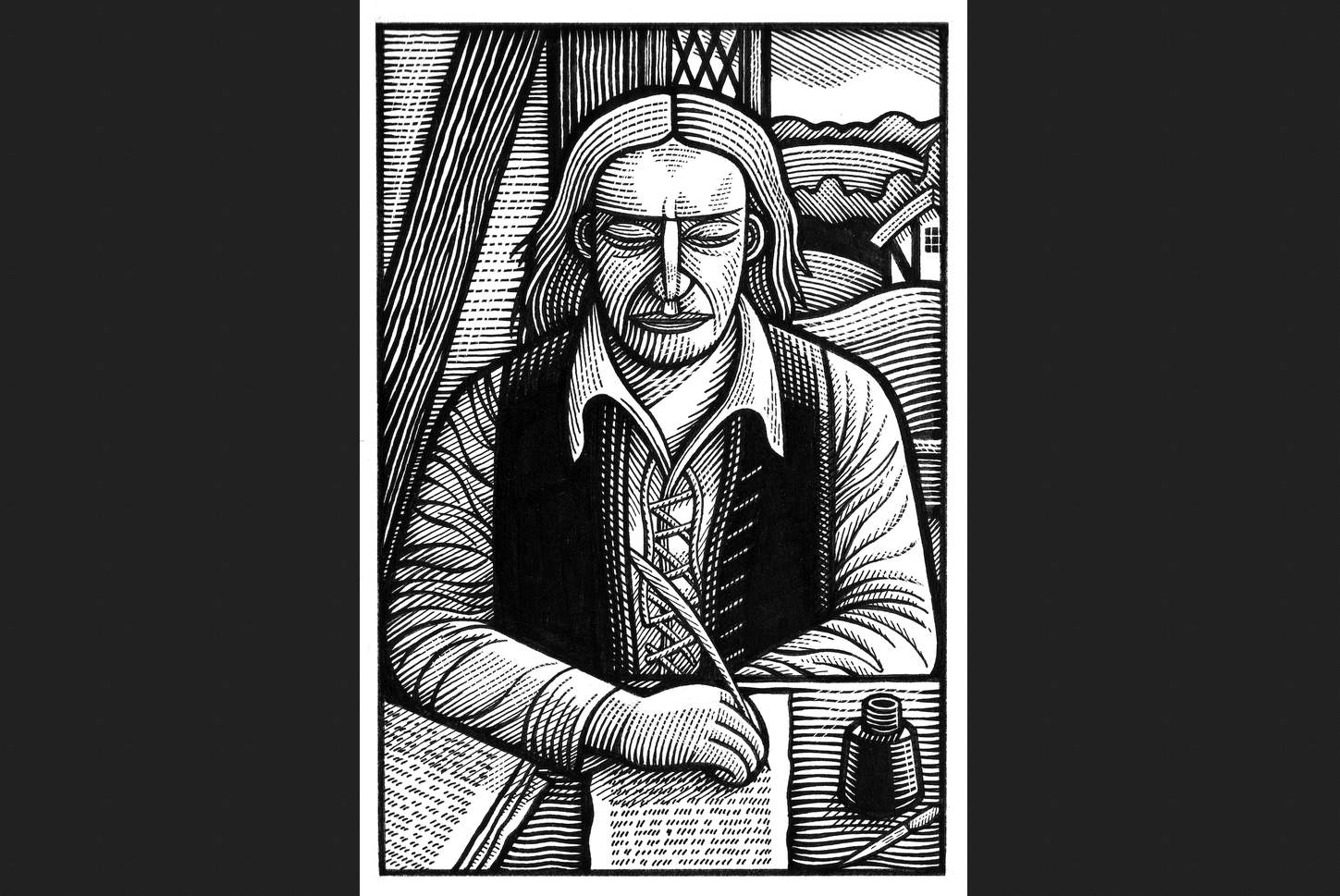
“To make the Earth a Common Treasury”
Marking 350 years since the death of the English revolutionary Digger Gerrard Winstanley (1609-1676)
Robert Graham
10 September 2026
During the peak of Gerrard Winstanley’s political activity in 1649-1650, he championed an early form of anarchist communism using a radical Protestant vernacular. Winstanley denounced coercive government (“government by the sword”) and private property (“mine and thine”), and through non-violent direct action sought to create egalitarian communities where everything would be held in common.
In his first explicitly political pamphlet, The New Law of Righteousness (1649), Winstanley argued that the desire to dominate and exploit others for one’s own advantage results not only in the creation of government, or “rule and dominion,” so that “one part of man-kind” may rule “over another,” but that it is through this hierarchical rule that private property is established, “thereby restraining other fellow creatures from seeking nourishment from their mother earth,” which the rich and powerful have claimed as their own.
Winstanley denounced all forms of domination, for: “every one that gets an authority into his hands tyrannises over others; as many husbands, parents, masters, magistrates, that lives after the flesh, doe carry themselves like oppressing Lords over such as are under them; not knowing that their wives, children, servants, subjects are their fellow creatures, and hath an equall priviledge to share with them in the blessing of liberty.”
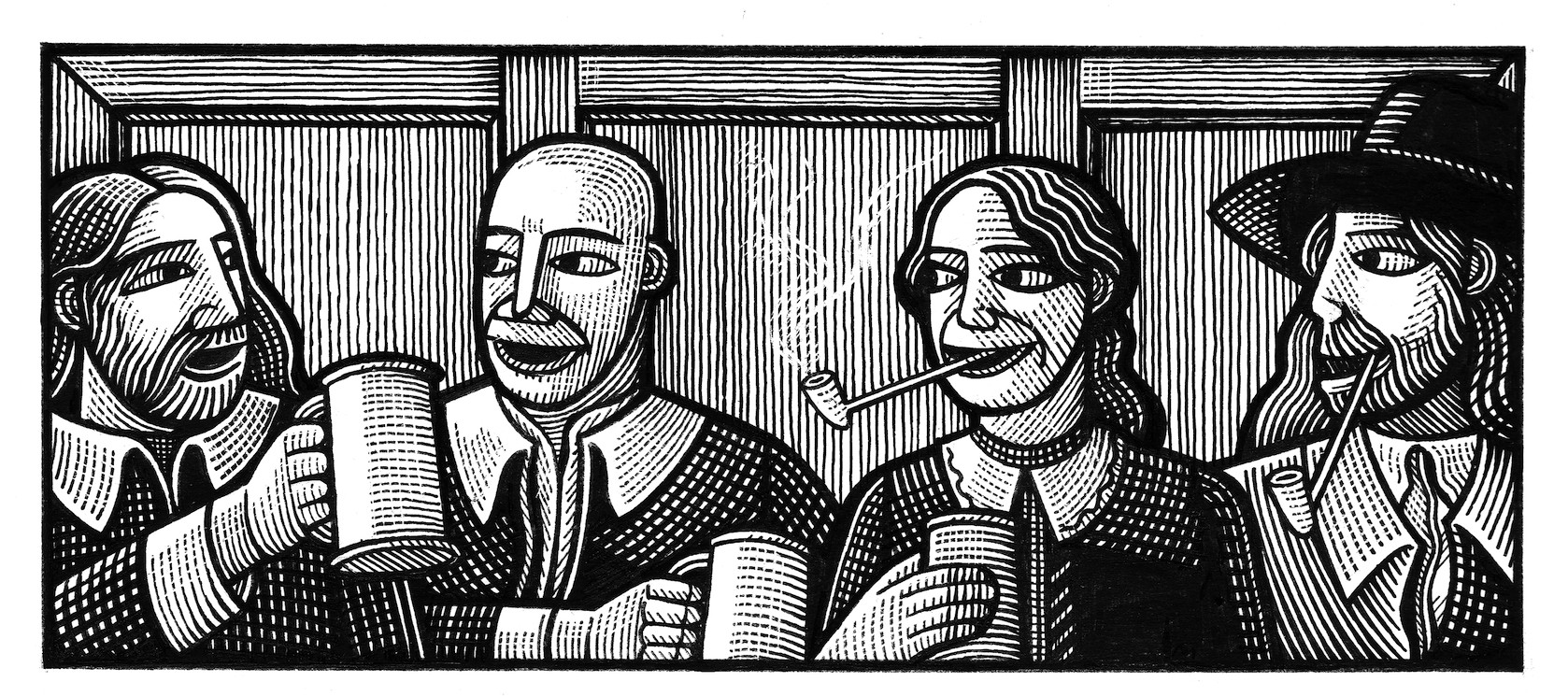
Winstanley advocated non-violent direct action, for “the time is now coming on, that men shall not talk of righteousness, but act righteousnesse.” Abolish private property and there “shall be no need of Lawyers, prisons, or engines of punishment one over another, for all shall walk and act righteously in the Creation.” No longer will people be “forced to rob and steal through povertie.” The earth and its riches shall become a common treasury for all, with everyone being free to take from that treasury what they need, while contributing to it through “the sweat of his own brows,” rather than living off the labours of others.
Within months of publishing The New Law of Righteousness, Winstanley issued another pamphlet, The True Levellers Standard Advanced, in which he called on the people of England to take back the land, as he and a group of “Diggers” began to cultivate “waste” (unoccupied) lands at (St.) George’s Hill in Surrey. By “digging and labouring the earth, one with another” at George Hill, the Diggers would inspire a movement to claim “all the commons and waste ground in England and in the whole world,” without anyone “owning any property; but taking the earth to be a common treasury, as it was first made for all.”
In this pamphlet Winstanley opposed wage labour, which he regarded as a form of servitude, telling “hireling labourers” – wage workers – that “you poor people” make “both scholars and rich men your oppressors by your labours.” Winstanley recognised that if the labourers refused to do the bidding of their masters, the latter would lose their power over the toiling masses. He advocated a general refusal “to work for hire,” a kind of general strike, for it is “by their labours” that the poor “have lifted up tyrants and tyranny; and by denying to labour for hire they shall pull them down again.”
The Digger movement enjoyed some success, but by the summer of 1650, all Digger “colonies” had been forcibly suppressed by the so-called “Commonwealth,” the short-lived English republic.
It is remarkable how much Winstanley’s ideas anticipate those of subsequent self-proclaimed anarchists. He denounced the division between masters and servants, the private appropriation of land, the alliance between political power and private property, subjection to the market, wage labour, the criminal justice system, the institutionalised violence of the state, institutionalised religion, and the lawyers, professors and priests (the intellectual class) who provided the ideological justification for this system of exploitation and domination. He advocated non-violent direct action to resist the market economy and to reclaim the commons by creating egalitarian, non-hierarchical communities where people would work together as equals, free to take what they needed from the common storehouses. He also opposed those reformers and revolutionaries who sought to take power into their own hands, which they would inevitably use to further their own interests.

After the suppression of the Digger movement, Winstanley remained silent until 1652, when he published his last pamphlet, The Law of Freedom in a Platform. While Marxists regard The Law of Freedom as Winstanley’s crowning achievement, from an anarchist perspective it is a mere footnote to his libertarian communist writings of 1649 – 1650. While still arguing in favour of communism, Winstanley now believed that it could only be implemented and maintained through a coercive governmental and legal apparatus.
Further reading:
Gerrard Winstanley, The Law of Freedom and Other Writings (Penguin, 1973), ed. Christopher Hill
John Gurney, Gerrard Winstanley: The Digger’s Life and Legacy (Pluto, 2013)
Robert Graham (ed.) Anarchism: A Documentary History of Libertarian Ideas, Vol.1 (Black Rose, 2005)
Anarchist theory



Freedom
Bookshop
Anarchist theory
Creating the conditions for anarchy
The road to liberation is long and arduous, but it can be taken step by step through education, non‑violent direct action, and a collective commitment to human flourishing
E.
|
15 September 2026

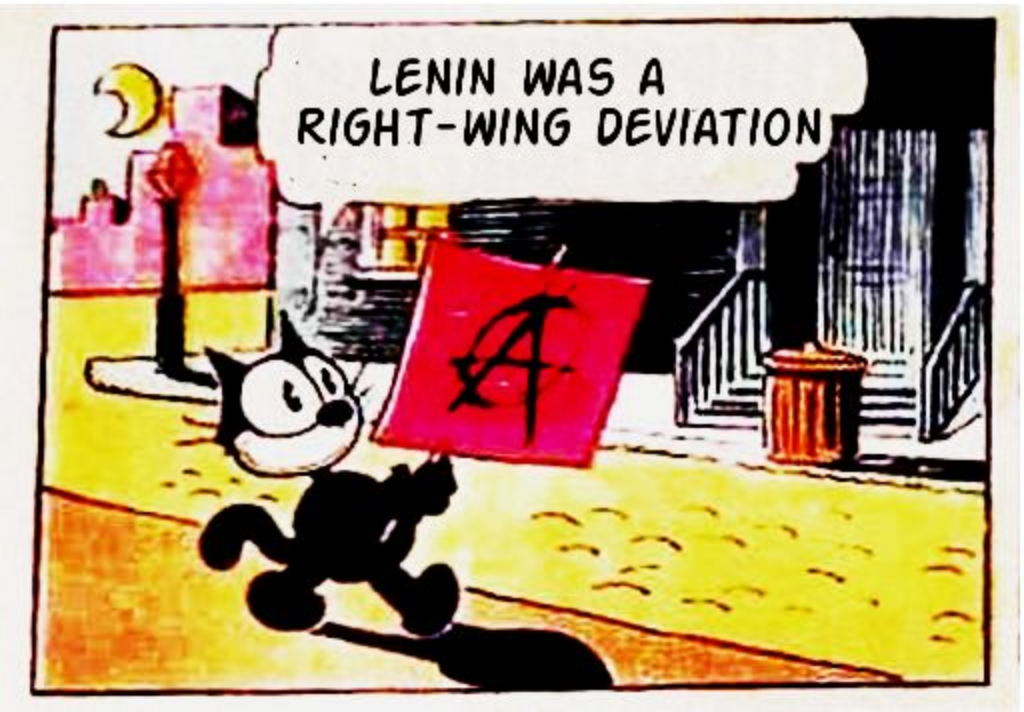
Why do Leninists and capitalists sound the same online?
A shared style of argument reveals something deeper about how people relate to ideology, authority, and criticism
The Slow Burning Fuse
Browse over a century of anarchist commentary and reporting from the Freedom digital archive
EXPLORE THE
Archives
Latest

Anarchist Xmas Special
Anarchist News Review: Danny Tommo vs dinghy, plus the London Bookfair!
Freedom News
|
25 September 2026

Burnham’s antidote fallacy
For all his talk of devolution, the PM’s reforms are likely to embed the state ever more intrusively in our lives
Jon Bigger
New In







Freedom Press







Subscribe to Freedom anarchist journal, sustain radical publishing and support independent media.
SUBSCRIBE
AND DONATE