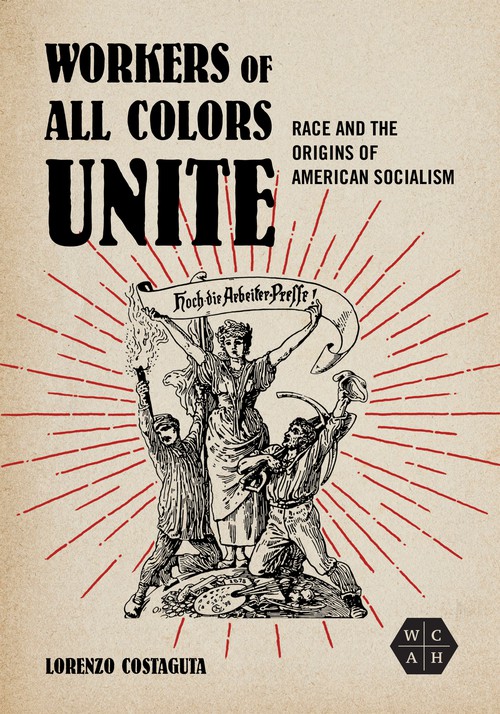







Workers of All Colors Unite

Race and the origins of American socialism

Lorenzo Costaguta

£23.99

|

1 in stock

1 in stock

As the United States transformed into an industrial superpower, American socialists faced the vexing question of how to approach race. Lorenzo Costaguta balances intellectual and institutional history to illuminate the clash between two major points of view. On one side, some believed labor should accept and apply the ascendant tenets of scientific theories of race. But others stood with International Workingmen’s Association leaders J. P. McDonnell and F. A. Sorge in rejecting the idea that racial and ethnic division influenced worker-employer relations, arguing instead that class played the preeminent role.

Costaguta charts the socialist movement’s journey through the conflict and down a path that ultimately abandoned scientific racism in favor of an internationalist class-focused American socialism. As he shows, the shift had a paradoxical effect: while distancing American socialism from the most hideous forms of white supremacism, it made the movement blind to the racist nature of American capitalism. The position that emerged out of the Gilded Age became American socialism’s most common approach to race in the twentieth century and beyond.

Recommended

Freedom

Bookshop

Angel Alley
84b Whitechapel High St
London E1 7QX

Opening hours: 12pm to 6pm

Latest

Freedom Press

something in

particular?

Not everything available in the physical bookshop is currently listed online. If you are searching for a particular book, periodical, or other product please get in touch and we may be able to source it for you