
|
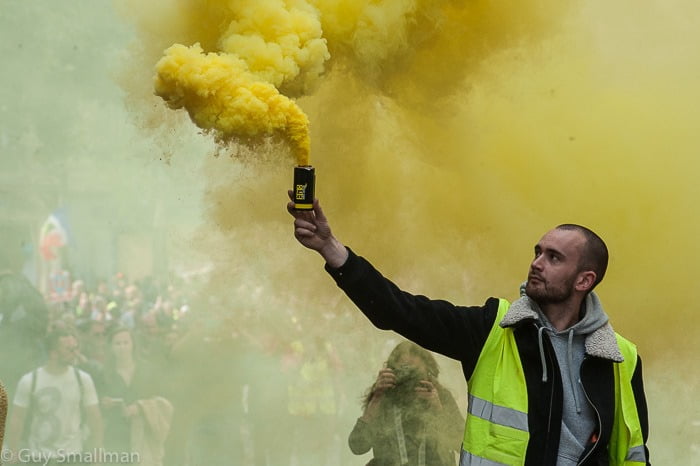
We are here, even if Macron doesn’t want it: One year of the Gilets Jaunes
On November 16th the Gilets Jaunes movement marked one year since it burst onto the scene and threw a spanner in the works of President Macron’s agenda.
Peter Ó Máille
1 December 2019
On November 16th the
Gilets Jaunes movement marked one year since it burst onto the scene
and threw a spanner in the works of President Macron’s agenda. The
protests that began on November 17th 2018 were triggered
by a rise in fuel prices which for many was simply the straw that
broke the camel’s back amid mounting concern with inequality and
the cost of living. It did not start as a rebellion against the
police, yet one of the key factors that has kept people returning to
the streets week after week is the anger at the injuries, arrests and
repression of the movement. This dynamic of police responses to
social movements fuelling those same movements has become
increasingly common in France and a notable trend since 2016.
Over the
course of the last year the state has brought the full power of its
police force against the Gilets Jaunes. According to one count 24
people have lost an eye or suffered severe damage (one more injury
from November 16th this year can be added to the count)
and 5 people have lost a hand while the Ministry of the Interior
itself estimates 2,448 injuries.[i]
One woman, 80 year-old Zineb Redouane, was killed by a police tear
gas canister in December. By September 2019 the same Ministry of the
Interior count claims police have used 19,071 of the infamous LDB
plastic projectile rounds and over 5,000 sting-ball grenades. An
estimated 3,000 court sentences have been handed down, while during
the movement’s first phase in November and December last year 3,300
people were arrested and 2,354 detained.[ii]
In Paris alone on the December 8th last year 1,082 people
were arrested.[iii]
Currently there are over 300 open enquiries by the police watchdog
(IGPN) into conduct by the forces of order. The first trial, for an
officer filmed throwing a paving stone at demonstrators on May 1st,
has only just got under way. The slow pace of investigations into the
police contrasts with the rapid processing of demonstrators and is
hardly surprising since the head of the IGPN declared in June that
she “completely refuses the term police violence”.[iv]
The movement
that erupted in November last year threw the government into panic.
After three consecutive Saturdays of barricades and clashes on some
of the world’s most luxurious streets the fuel tax was first
frozen and then hastily scraped. For the next Saturday the centre of
Paris was put into a state of siege. Metro stations were closed,
shops and banks boarded up and the streets were eerily empty. The
police force that was deployed to deal with this situation was little
short of an army. In addition to their usual array of plastic
projectiles and grenades, armoured vehicles rumbled up and down the
boulevards. As the crisis continued into the next year the military
were put on standby to supplement the police as the anti-terrorist
military detachments deployed in French cities since 2015 were
directed to guard fixed points. The state got to the point where the
only remaining step of escalation was to put the military in direct
contact with the protesters.
In
subsequent months police powers were augmented. An anti-protest bill
made it an offence to cover your face at a demonstration.[v]
This is a common move, seen in Greece in 2009 and recently in Hong
Kong. In any state where tear gas is deployed this measure is a
backdoor way to criminalise protest as covering your face under the
gas is a necessity but doing so automatically makes you a criminal.
Undeclared demonstrations have been cracked down on and large parts
of city centres declared off limits for demonstrations. Official
protests can now be surrounded by police before they begin, and the
force has increased powers to pre-emptively detain people. While
complaints about the police’s ‘non-lethal’ arsenal have grown
no weapons have been withdrawn and a new mobile police force has been
deployed.
Formally
police powers have increased considerably. Informally their position
has also been enhanced. While the police have been unable to end the
protests, they did show in the winter of last year that they were
successfully able to defend the panic-stricken government. The police
were not slow to utilize the leverage this gave them. Sections of the
police started their own spontaneous demonstrations demanding better
pay and bonuses in late December. Some hinted that they were open to
joining the ongoing protests. Wisely Macron quickly granted their
requests and paid up.[vi]
As unpopular governments become more dependent on the police, the
police themselves become more independent and more willing to push
their own demands and policies.[vii]
Despite
the repression the Gilets Jaunes kept coming back. Every Saturday
they were there. The government was taken by surprise in March when
the police again lost control of the Champs-Élysées months after
the movement was believed dead. Macron having been forced to cut
short a skiing weekend in the Pyrenees, hastily fired the chief of
police. Over time the Gilets Jaunes began to support other sectors in
their struggles. On May 1st the traditional demonstrations
were augmented by the Gilets Jaunes and for all that a new hard-line
police policy was meant to put a stop to the movement the widespread
clashes of that day meant that the Interior Minister could only boast
that “the worst had been avoided”.[viii]
During the summer Gilets Jaunes were present at the protests over the
death of Steve Canico who drowned in the Loire after riot police
charged a late-night concert by the river. September saw Gilets
Jaunes join the climate march in Paris before it was violently
dissolved by the police. Numerous Gilets Jaunes will be joining the
major strikes planned to begin on December 5th against
Macron’s plans for the pension system.
Many of the movement’s
participants had not been politically active before and when they
mobilised to express their grievances around the cost of living they
were shocked to be greeted with grenades, armoured vehicles and
permanent injuries. Weapons and tactics which previously had mostly
been used on the margins of society, against the working class and
diverse population of the suburbs or on the ZAD, were turned against
a section of the mainstream of society. The Gilets Jaunes reacted by
incorporating criticism of the police into their movement. From early
on this year it was notable that the central slogan calling for
Macron’s resignation had been lengthened to demand the imprisonment
of the Interior Minister. Anti-police slogans gained more currency as
time wore on. Calls for bans on the most dangerous elements in the
police’s arsenal became central to the movement along with
solidarity to the arrested and injured. The police response to the
movement did not crush it, instead it added a further reason to
mobilise.
In this respect what we have seen
over the last twelve months has been a reply of the social movement
of 2016. Between March and July of that year a movement of strikes,
occupations and demonstrations contested the loi travail, a
series of changes to the labour code. What began in March and April
with small groups clashing with the police constantly grew till by
early summer large riotous demonstrations were taking place almost
every week. Every time the riot police tried to disperse these
demonstrations more and more people came forward to oppose them.
Those who joined the clashes or stood in solidarity with those who
did went to the front of the demonstrations and formed the autonomous
and heterogeneous, cortège
de tête. By
summer this breakaway section was as big as the official blocks
marching with the trade unions. Riot police tactics based on close
contact only inflamed the situation and in the end all the police
could do was surround the marches with fences and barriers to
contain, but not end, the chaos. This movement ended with the passing
of the loi travail and the police on the verge of banning
further demonstrations. Significantly though the crowds who formed
that movement were never defeated. Over the next eighteen months
people searched, unsuccessfully, for moments to resume the momentum
of 2016.
This was the
atmosphere when the Gilets Jaunes burst onto the scene. The current
situation is in many ways the same as that in the summer of 2016. On
November 16th this year the majority of Gilets Jaunes in
Paris were contained by the police in Place d’Italie and bombarded
with tear gas for several hours stifling the day’s demonstrations.
The police have been able to tactically check the Gilets Jaunes in
the same way they did the movement of 2016 by smoothing gatherings
beneath a blanket of total control. However, despite a year of
unprecedented repression thousands of people still came out onto the
streets of France to mark the movement’s first anniversary. Thousands
of people withstood the police barrage in Place d’Italie for hours
before setting off on a series of spontaneous demonstrations. Just
like the movement of 2016, the Gilets Jaunes have not been defeated
and will likely continue to search for ways to act.
Police actions in 2016 and 2018/19 no doubt radicalised many while only temporarily bringing back a sense of control. Should the French state continue on the path of violence and repression it has followed in recent years it has little room to escalate before it arrives at extreme measures. Around the world we are seeing another wave of uprisings and protests as governments of every stripe are incapable of addressing the multiplying signs of crisis. In such times governments become beholden to the security forces which have become their primary response to unrest. As we see principally in Chile and Hong Kong there is just as much chance that police measures will increase the popular response. The more riot police units are militarised the more they lose their ability to control the streets without dangerously increasing tensions. This is the trap that confronts the French state as well. Its police are becoming ever more powerful, armed and assertive yet social movements keep popping up and so far despite everything they have thrown at those on the streets they can only claim that the “worst has been avoided”.
Citation:
[i] https://alloplacebeauvau.mediapart.fr/
[ii] https://www.bastamag.net/gilets-jaunes-champs-elysees-justice-repression-condamnations-violences-police-loi-anti-casseurs-prison
[iii] http://en.rfi.fr/france/20181209-1700-arrested-france-paris-takes-stock-destruction-after-yellow-vest-protest
[iv] https://www.bfmtv.com/police-justice/la-patronne-de-l-igpn-refute-totalement-le-terme-de-violences-policieres-1712147.html
[v] http://www.rfi.fr/en/france/20190313-french-senate-backs-controversial-anti-riot-bill-yellow-vests-gilets-jaunes
[vi] http://en.rfi.fr/france/20181220-French-police-win-pay-rises-after-post-Yellow-Vest-protests
[vii] For a full examination of this pattern see the Invisible Committee Now
[viii] http://www.rfi.fr/en/visiting-france/20190502-worst-avoided-says-french-government-after-may-day-clashes-police-woes-not-
Photo credit: Guy Smallman
[i] https://alloplacebeauvau.mediapart.fr/
[ii] https://www.bastamag.net/gilets-jaunes-champs-elysees-justice-repression-condamnations-violences-police-loi-anti-casseurs-prison
[iii] http://en.rfi.fr/france/20181209-1700-arrested-france-paris-takes-stock-destruction-after-yellow-vest-protest
[iv] https://www.bfmtv.com/police-justice/la-patronne-de-l-igpn-refute-totalement-le-terme-de-violences-policieres-1712147.html
[v] http://www.rfi.fr/en/france/20190313-french-senate-backs-controversial-anti-riot-bill-yellow-vests-gilets-jaunes
[vi] http://en.rfi.fr/france/20181220-French-police-win-pay-rises-after-post-Yellow-Vest-protests
[vii] For a full examination of this pattern see the Invisible Committee Now
[viii] http://www.rfi.fr/en/visiting-france/20190502-worst-avoided-says-french-government-after-may-day-clashes-police-woes-not-
Photo credit: Guy Smallman
France








Freedom
Bookshop
France

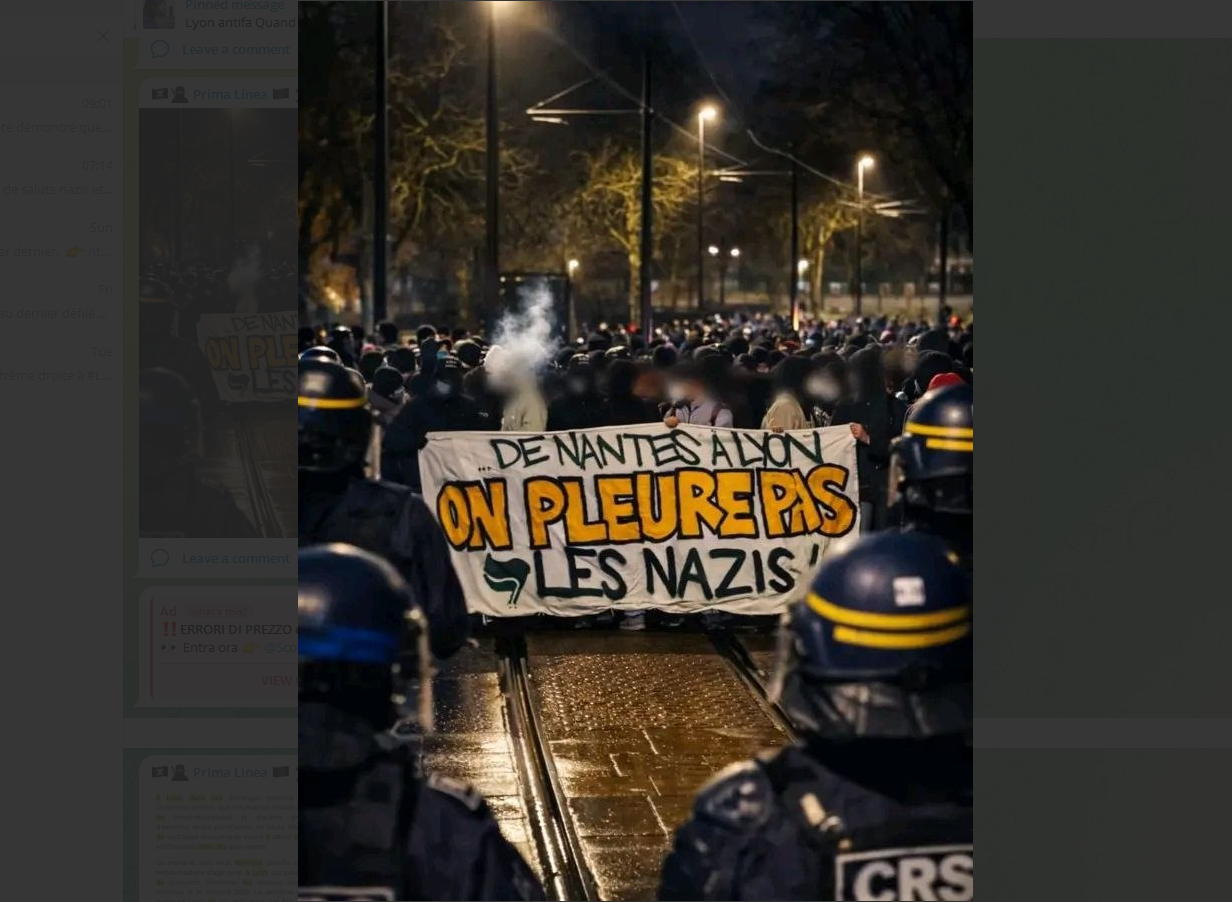
Killing of neo-Nazi in Lyon: “Anti-fascism is now being exploited”
The death of Quentin Deranque is being used as a pretext for equating fascism and Anti-fascism
Rozenn Le Carboulec
New In







Freedom Press





Subscribe to Freedom anarchist journal, sustain radical publishing and support independent media.
SUBSCRIBE
AND DONATE
Latest
Greek prisoners release: Selective American condemnation is telling
Two long-term prisoners were released in Greece this week: a prominent neo-nazi leader, and an anarchist. Only one of the two was singled out by the US ambassador.
Neil Middleton
|
19 September 2026
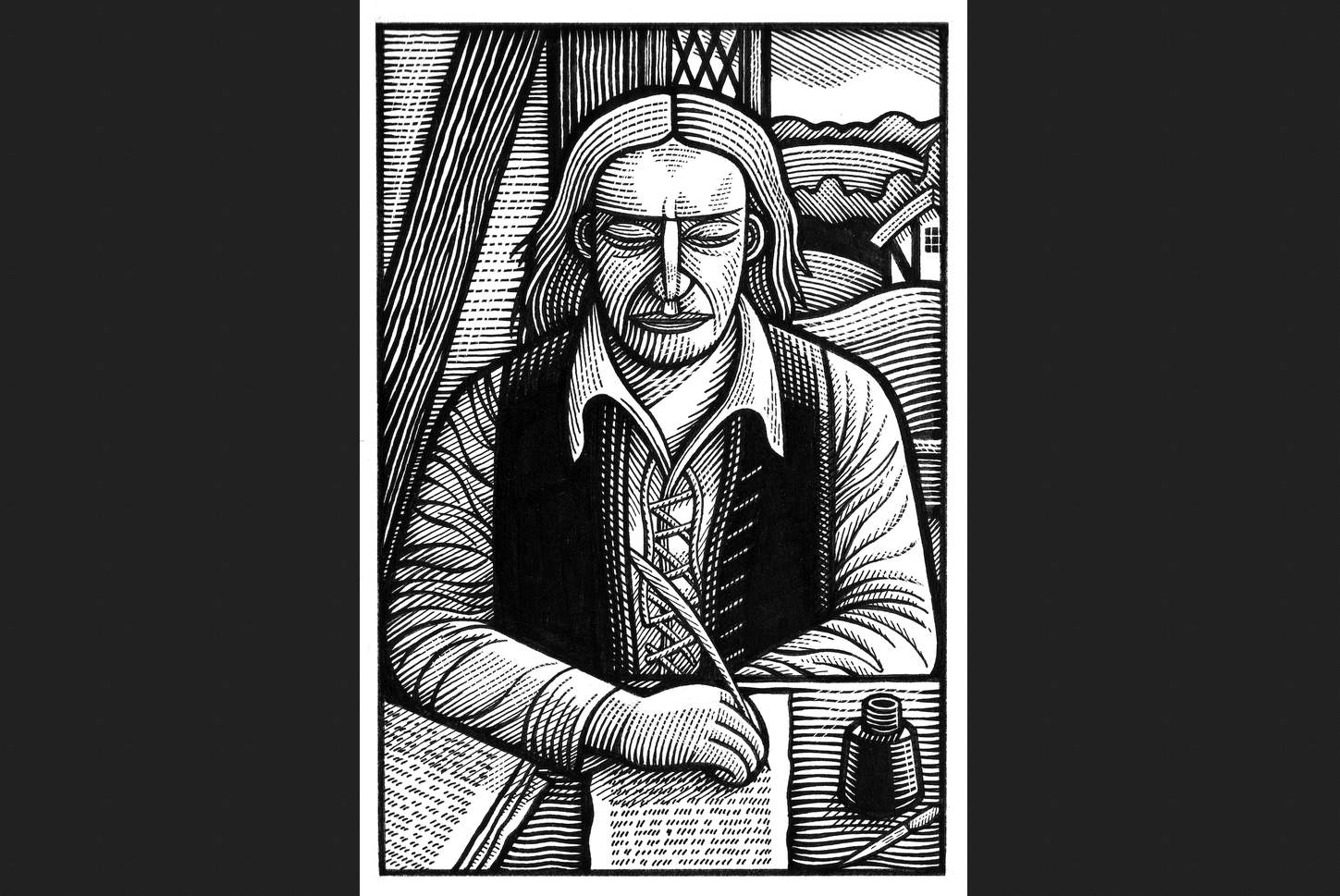
“To make the Earth a Common Treasury”
Marking 350 years since the death of the English revolutionary Digger Gerrard Winstanley (1609-1676)
Robert Graham
Browse over a century of anarchist commentary and reporting from the Freedom digital archive
EXPLORE THE
Archives