
|
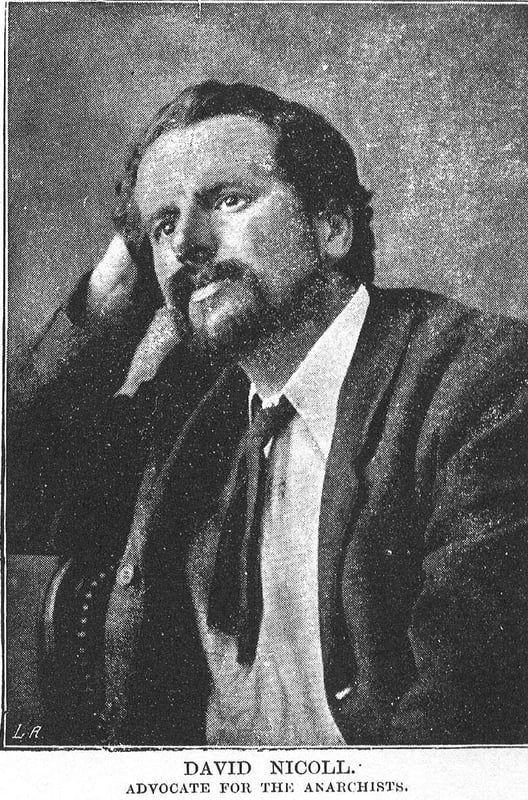
A tribute to David Nicoll (1859-1919)
Kate Sharpley Library
30 March 2019
In March 2019 it’s a hundred years since the death of David Nicoll,
anarchist speaker, writer, editor, poet and activist. He was a central
figure in keeping the Commonweal going after William Morris left the Socialist League in 1890. From 1894-97 he lived in Sheffield, producing the Anarchist
single-handedly.[1] Nicoll is best known for his tireless work in
defence of the Walsall Anarchists and served eighteen months for an
article written in protest at their framing in 1892.
On trial for ‘seditious libel’ at the Old Bailey he said:
‘For
my part, I am willing to suffer for my ideas, knowing full well that
our friends increase with persecution and I am quite willing to suffer
in a good cause. I only tell you that you will not crush the movement by
repression. You will only make it more revolutionary and dangerous’
John
Quail says ‘This was a brave speech. In defending himself and by this
final speech for the defence, Nicoll takes his place among those
immoderate heroes and martyrs in the cause of a free press’. The Lord
Chief Justice took care to praise Nicoll’s ‘education and force of
character’, but as Quail points out ‘praise from such quarters is rather
like being given the privilege of being eaten by a crocodile with
especially clean teeth’.[2]
This term of imprisonment gave a blow
to Nicoll’s natural optimism (‘short and brief shall be the fight’ gives
an idea of view of the revolution)[3]. In Chelmsford jail he imagined
crowds outside singing the ‘Carmagnole’, becoming something much more
disturbing: ‘Swifter and swifter ran the magic tune. Wilder and wilder
grew the dance and louder the chant, till it sounded as if a host of
witches was keeping Sabbath around the prison. Hell was let loose.’[4]
Worse was to follow on release when those who had taken over the Commonweal
refused to allow him back as editor. Conflict with the ‘great and the
good’ of the English anarchist movement also helped drive him to
paranoia and poverty. Selling his handwritten scrawls, Nicoll ‘gained a
precarious living from small sums given to him by comrades who recalled
his past services to the movement, or had learned of them.’[5]
Nicoll died on the 2nd March 1919. He is buried in Islington and St Pancras Cemeteries in an unmarked grave No 26, off Viaduct Road in the cemetery. A relative of his would like to mark the spot. Please let us know if you’d like to join us in helping make that happen.
A final word from George Cores who knew Nicoll (in both the good and bad times) looking back at 1886:
‘He
had a modest but attractive and persuasive style of address, and always
“held” his crowd at an open air meeting. He was already writing his
Socialist and Revolutionary songs and a group of young men and women, of
whom I was one, used to sing them in Hyde Park at our meetings, there –
which used to continue for six or seven hours – and afterwards march in
procession along Oxford Street headed by a splendid (real) red flag to
Clerkenwell Green or to the Socialist League Hall in Farringdon Road.
Sometimes Nicoll was with us, all the time as enthusiastic as
the rest.’[6]
Notes
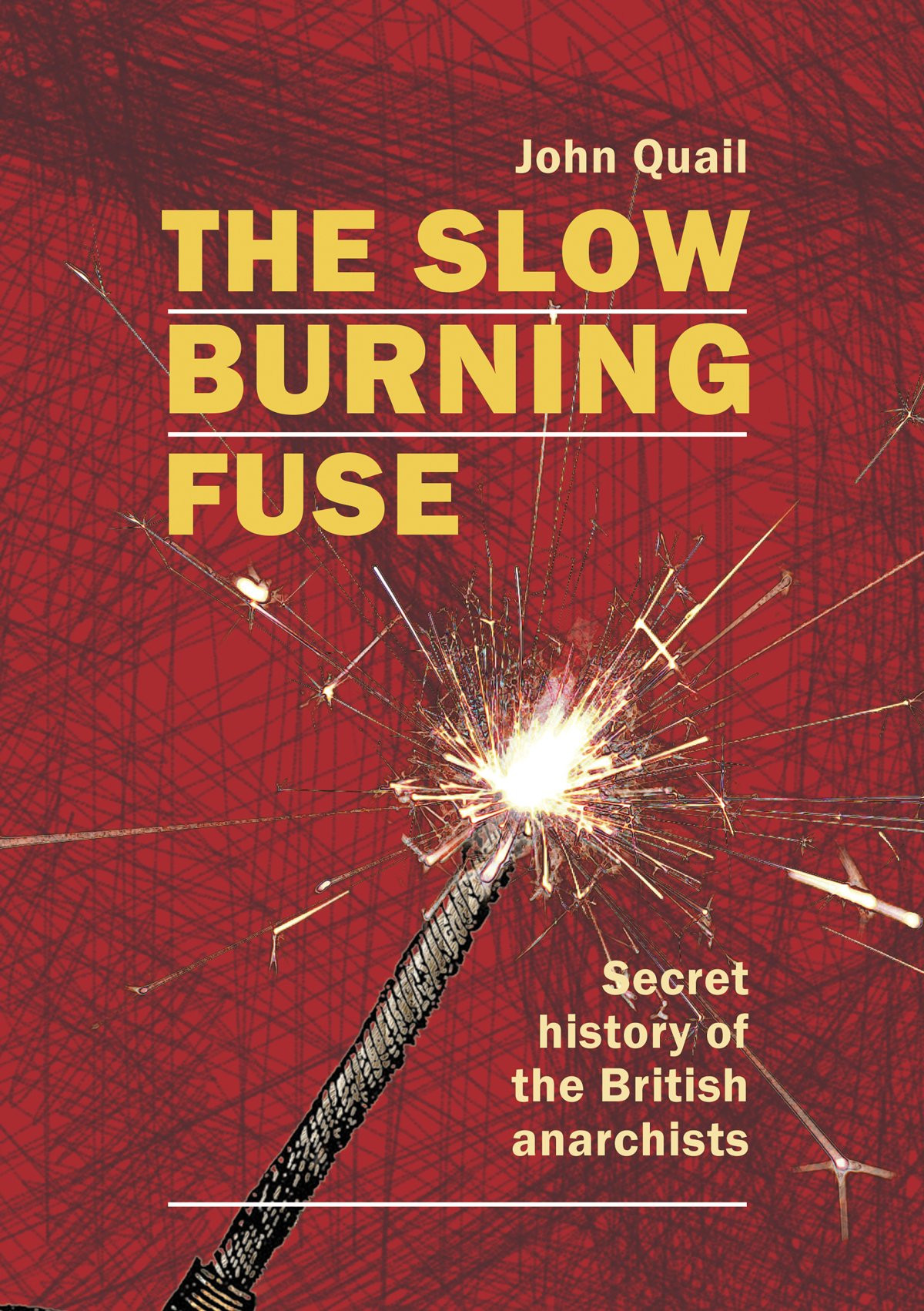
1, Andy Lee’s The Red Flag of Anarchy: A History of Socialism & Anarchism in Sheffield 1874-1900 quotes him on the difficulties of being a Londoner up North ‘And when I try to talk the language of the country, when I say, “reet owd lad. How’s owd lass”, they laugh at me as if I was a Frenchman trying to talk English and say “Get out you blooming Cockney”’ [p157]2, The slow burning fuse, pages 132-134. Nicoll’s words come from his pamphlet Anarchy at the bar, those of the beak from The Times 7 May 1892. (The official record can be seen at https://www.oldbaileyonline.org/browse.jsp?div=t18920502-493)
3, From ‘The coming of the light’ from Socialist songs (Leicester Anarchist-Communists, 1895) https://www.katesharpleylibrary.net/x69r40
4, quoted in John Quail, The slow burning fuse, page 135
5, Guy Aldred, Dogmas discarded vol.II (Glasgow 1940) p68, Quoted in John Quail, The slow burning fuse page 339.
6, From his contribution to a David Nicoll memorial meeting, reprinted in Freedom, May 1931. Reprinted in KSL: Bulletin of the Kate Sharpley Library No. 16, September 1998. https://www.katesharpleylibrary.net/gxd2xh
Reposted from Kate Sharpley Library
Freedom
Bookshop

New In







Freedom Press
Subscribe to Freedom anarchist journal, sustain radical publishing and support independent media.
SUBSCRIBE
AND DONATE
Latest
Greek prisoners release: Selective American condemnation is telling
Two long-term prisoners were released in Greece this week: a prominent neo-nazi leader, and an anarchist. Only one of the two was singled out by the US ambassador.
Neil Middleton
|
19 September 2026
“To make the Earth a Common Treasury”
Marking 350 years since the death of the English revolutionary Digger Gerrard Winstanley (1609-1676)
Robert Graham
Browse over a century of anarchist commentary and reporting from the Freedom digital archive
EXPLORE THE
Archives