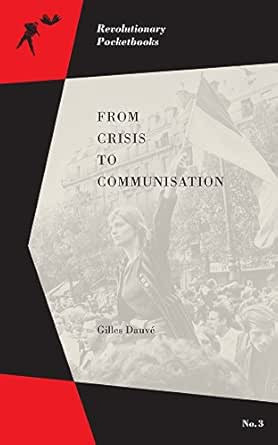
Communisationâ means something quite straightforward: a revolution that
starts to change social relations immediately. It would extend over years,
decades probably, but from Day One it would begin to do away with wage-
labour, profit, productivity, private property, classes, States, masculine
domination, and more. There would be no âtransition periodâ in the Marxist
sense, no period when the âassociated producersâ continue furthering
economic growth to create the industrial foundations of a new world.
Communisation means a creative insurrection that would bring about
communism, not its preconditions. Thus stated, it sounds simple enough. The
questions are what, how, and by whom. That is what this book is about.
Communisation is not the be-all and end-all that solves everything and
proves wrong all past critical theory. The concept was born out of a
specific period, and we can fully understand it by going back to how people
personally and collectively experienced the crises of the 1960s and â70s.
The notion is now developing in the maelstrom of a new crisis, deeper than
the Depression of the 1930s, among other reasons because of its ecological
dimension, a crisis that has the scope and magnitude of a crisis of
civilisation. This is not a book that glorifies existing struggles as if
their present accumulation were enough to result in revolution. Radical
theory is meaningful if it addresses the question: How can proletarian
resistance to exploitation and dispossession achieve more than aggravate
the crisis? How can it reshape the world?