
|
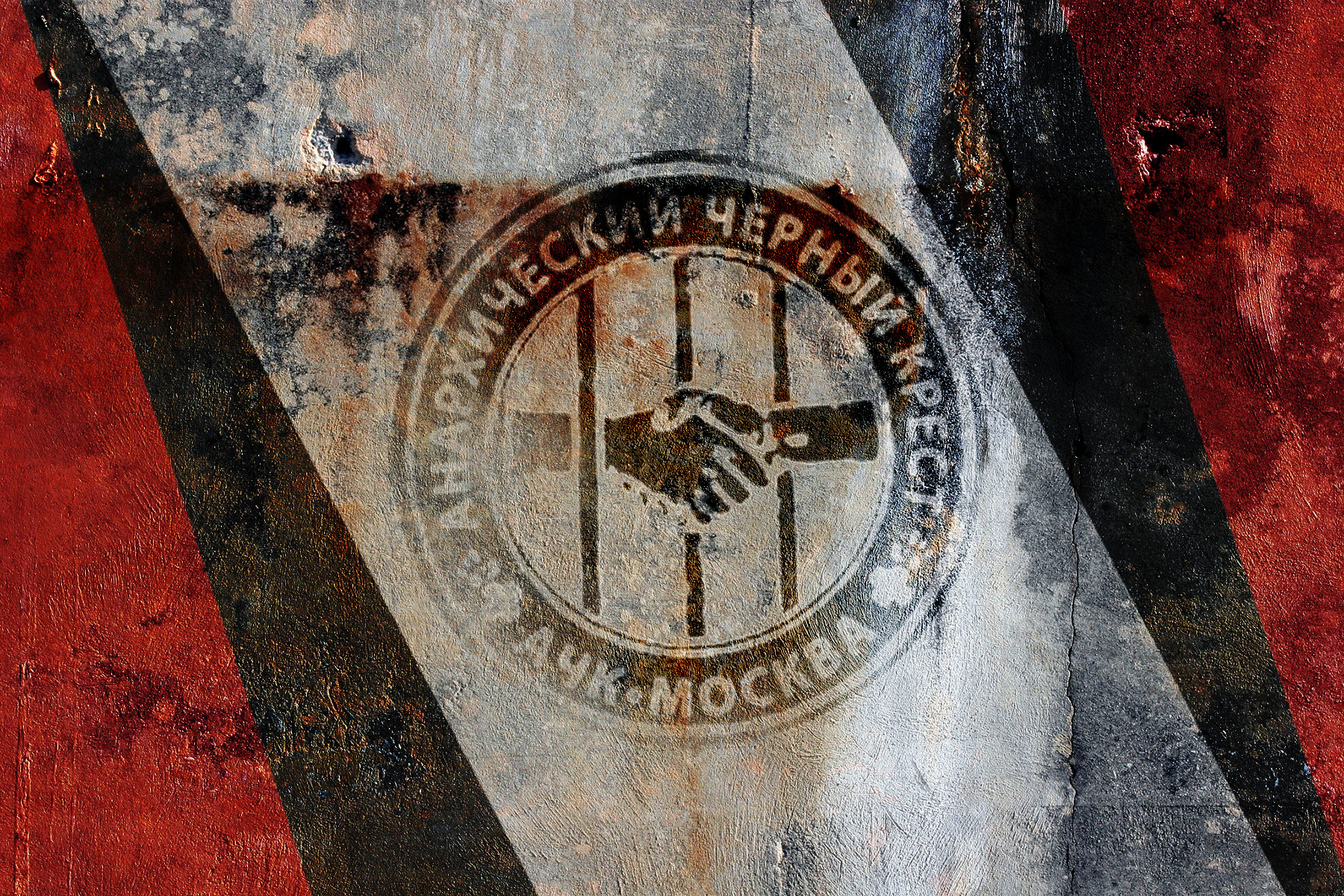
Through war, despotism and social change: Russia’s Anarchist Black Cross
Interview with Anarchist Black Cross-Moscow
Sean Patterson
30 August 2024
For this year’s International Anarchist Prisoner Solidarity Week, Freedom interviewed the Anarchist Black Cross-Moscow to discuss their long history in Russia supporting imprisoned Russian anarchists, the challenges they face under Putin’s regime and their work during the war on Ukraine.
Russia has a long history of repressing both political prisoners and activists advocating on their behalf. In fact, Russia is the birthplace of the Anarchist Red Cross, which later became the Anarchist Black Cross. Can you tell our readers about the ABC’s historical origins, activities, and importance in Russia? It was usual in the 19th century that groups supporting political prisoners called themselves the “Political Red Cross.” One such organisation helped Pyotr Kropotkin to escape from prison in 1876. Tens of thousands were imprisoned in Russia after the revolutionary events of 1905-1907, and the need for prisoner advocacy increased. Anarchists felt that the Political Red Cross was giving priority to other socialist prisoners over anarchists, and anarchists established their own organisations in Russia and internationally, which were especially active in centres of Russian and Jewish emigrants in the UK and USA. After the 1917 February Revolution and the liberation of all political prisoners in the former Russian Empire, these organisations ceased their activities. But already in the spring of 1918, anarchists had to set up new organisations to support their comrades repressed by the Bolsheviks. They established themselves now under the name Anarchist Black Cross (ABC).
The Anarchist Black Cross’s activities in Russia are now pretty much the same as they were 100 years ago—providing financial support to prisoners and corresponding with them. The only difference is that in the first half of the 20th century, there were hundreds of anarchist prisoners in Russia, whereas currently, there are less than 20.
Gradually, anarchists in the Soviet Union were imprisoned and forced to emigrate, and support organizations were based abroad. Organisations such as the Support Fund of Alexander Berkman did not use the ABC label, but they were part of the same lineage.
During the great purge of 1937, contact with most of the anarchist prisoners was lost as they were executed. Around 1940, all prisoner correspondence outside the USSR was banned. Support for anarchist political prisoners in the Soviet Union became impossible, and the focus of solidarity moved to other countries, such as anarchist prisoners in Spain. The Alexander Berkman Support Fund continued its activities until the 1970s, while the first modern group using the ABC name was established in London in 1967 by Albert Meltzer, Stuart Christie, and others. Groups quickly spread to Italy, Germany, and other countries, and since then, there has been a continuity of groups working under the ABC name. Can you tell us about ABC-Moscow in particular? When and how did it start? What are your founding principles? Did you face any initial organizational obstacles? Anarchist Black Cross-Moscow was established in 2003, in the aftermath of the trials against members of the New Revolutionary Alternative (NRA). The NRA was an armed group consisting of both anarchists and authoritarian Marxists, which engaged in a symbolic bombing campaign in Moscow and the Moscow region. The most notable action of the group was the bombing of the FSB security services reception building next to Lubyanka Square in the center of Moscow in 1998. We were supporting anarchist members of the NRA and decided to establish a more longstanding group also to support anarchist prisoners abroad. Our basic statement can be found on our website and has not changed much over the last 20 years. It outlines who we support:
Russia has a long history of repressing both political prisoners and activists advocating on their behalf. In fact, Russia is the birthplace of the Anarchist Red Cross, which later became the Anarchist Black Cross. Can you tell our readers about the ABC’s historical origins, activities, and importance in Russia? It was usual in the 19th century that groups supporting political prisoners called themselves the “Political Red Cross.” One such organisation helped Pyotr Kropotkin to escape from prison in 1876. Tens of thousands were imprisoned in Russia after the revolutionary events of 1905-1907, and the need for prisoner advocacy increased. Anarchists felt that the Political Red Cross was giving priority to other socialist prisoners over anarchists, and anarchists established their own organisations in Russia and internationally, which were especially active in centres of Russian and Jewish emigrants in the UK and USA. After the 1917 February Revolution and the liberation of all political prisoners in the former Russian Empire, these organisations ceased their activities. But already in the spring of 1918, anarchists had to set up new organisations to support their comrades repressed by the Bolsheviks. They established themselves now under the name Anarchist Black Cross (ABC).
The Anarchist Black Cross’s activities in Russia are now pretty much the same as they were 100 years ago—providing financial support to prisoners and corresponding with them. The only difference is that in the first half of the 20th century, there were hundreds of anarchist prisoners in Russia, whereas currently, there are less than 20.
Gradually, anarchists in the Soviet Union were imprisoned and forced to emigrate, and support organizations were based abroad. Organisations such as the Support Fund of Alexander Berkman did not use the ABC label, but they were part of the same lineage.
During the great purge of 1937, contact with most of the anarchist prisoners was lost as they were executed. Around 1940, all prisoner correspondence outside the USSR was banned. Support for anarchist political prisoners in the Soviet Union became impossible, and the focus of solidarity moved to other countries, such as anarchist prisoners in Spain. The Alexander Berkman Support Fund continued its activities until the 1970s, while the first modern group using the ABC name was established in London in 1967 by Albert Meltzer, Stuart Christie, and others. Groups quickly spread to Italy, Germany, and other countries, and since then, there has been a continuity of groups working under the ABC name. Can you tell us about ABC-Moscow in particular? When and how did it start? What are your founding principles? Did you face any initial organizational obstacles? Anarchist Black Cross-Moscow was established in 2003, in the aftermath of the trials against members of the New Revolutionary Alternative (NRA). The NRA was an armed group consisting of both anarchists and authoritarian Marxists, which engaged in a symbolic bombing campaign in Moscow and the Moscow region. The most notable action of the group was the bombing of the FSB security services reception building next to Lubyanka Square in the center of Moscow in 1998. We were supporting anarchist members of the NRA and decided to establish a more longstanding group also to support anarchist prisoners abroad. Our basic statement can be found on our website and has not changed much over the last 20 years. It outlines who we support:
“We support all anti-authoritarians, and their supporters who are persecuted due to their political activities or acts which do not contradict the ideal of anarchism. And whenever possible, we support also prisoners who became anti-authoritarians during their sentences, so-called “social prisoners” who were forced to break laws for subsistence or in the fight against the despotism of the ruling class, and prisoners who fight against the prison-industrial complex from the inside.”
In practice, we have never been able to support all the listed groups.
Until this year, we almost never faced serious challenges from the side of the authorities. In the first years, there was a case when a comrade was arrested in Yaroslavl after receiving our materials, and officers beat him in order to find out who was behind ABC-Moscow. But besides this incident, there was never a serious threat against our group and, until 2022, we were not that much concerned about our security, although the group was never working openly.
Now, after 21 years, we are one of the oldest Anarchist Black Cross groups in the world, perhaps aside from the Brighton group, and some sections of the Anarchist Black Cross Federation in the United States are older.
In the post-Soviet period, when did the incarceration of anarchists begin? Have the authorities consistently targeted anarchists, or has the level of their incarceration worsened over time?
Struggles for anarchist prisoners in new Russia started pretty much immediately when it was established. The first major campaign was for Rodionov and Kuznetsov, two punks accused of defending themselves with a razorblade and penknife against police attacking a demonstration for victims of the Soviet terror in March of 1991. The campaign kicked off in February 1992 after their sentences, less than two months after the collapse of the Soviet Union. The solidarity campaign got widespread attention and was successful in shortening the sentences.

In the last years of the 2000s, the Anarchist Black Cross was mostly busy dealing with repressions against Antifa. Antifa first appeared in Moscow, Volzhsk, and Krasnodar in the late ’90s. The scale and intensity of the confrontations with Nazis gradually grew until Nazis began targeted assassinations against anti-fascists in Moscow and St Petersburg. Previously indifferent authorities got involved, and a number of anti-fascists were imprisoned.
Stanislav Markelov was often the chosen lawyer for Antifa and was also an activist of the movement itself—he anonymously wrote the Red Book of the anti-fascist, a small pamphlet to outline the principles of the struggle. Markelov was not an anarchist himself but a leftist anarchist sympathiser who was well-read in the history of the movement. He ended up on the Nazi hit list and was murdered in 2009 together with Anastasia Baburova, an anarchist and member of Autonomous Action. The murder of Markelov was a huge blow to ABC-Moscow, from which we still have not recovered, in the sense that we have never since had such a trusted lawyer comrade. Although Markelov did not provide his services for free, it is very challenging to find a lawyer who understands how to defend political people with political charges.

Failure to stop the Network case set up the pattern to come. In 2022, authorities fabricated another underground “anarchist organisation,” this time in Tyumen, Yekaterinburg and Surgut (the Tyumen Case). All the accused were tortured, and the case is currently in court. Now, any anarchist targeted by authorities may expect torture, trumped-up charges and decades in prison.
How do you define prison abolition, and how do you explain the importance of this goal to people who may have never encountered this idea before?
We are against all prisons, but unlike many other Anarchist Black Cross groups around the world, we have never concentrated much on criticism of incarceration and its alternatives, restorative or transformative justice. Our work concentrates on very practical support work for repressed comrades, so, unfortunately, we cannot give a smart answer to this question.
We do not believe in any kind of restorative or transformative accountability process with Putin and his Chekist, oligarch and mafia friends. Instead, there will be a severe retribution. However, currently, we are so far from this goal that it is pointless to discuss what could be a proper punishment for them.
What services does ABC-Moscow provide for anarchist prisoners? What types of events do you organise?
We are a small group, and we seldom take care of complete cases of repression – more often, we are a sort of information and financial clearinghouse between the international anarchist community and friends and family who are providing lawyers and parcels for prisoners. Often, the biggest financial burden of the defence is on the families of the prisoners. A number of more known prisoners have specialised support groups and campaigns, and we try to spread their fundraisers and other news.
It is still possible in Russia to organise prisoner support events, such as letter writing, movie screenings, and concerts, although they are sometimes raided by authorities. However, due to the increased attention toward our group, we do not organise such events or any offline events with the name of our group.
Are there any notable successes of your organisation or particular cases you would like to highlight?
It has always been quite uncommon to have someone released due to a support campaign. Usually, we have to be happy with more modest “successes,” such as providing a prisoner with a lifeline through lawyer visits and letters.
One exception was the Khimki case, in which anti-fascists Alexey Gaskarov and Maxim Solopov were accused of organising a riot against the municipal administration during a 2010 campaign against the construction of a new motorway from Moscow to St Petersburg. Gaskarov was found not guilty, and Solopov got a very lenient two-year probational sentence. Although, it is hard to say how much of this was due to the support campaign.
How has the war in Ukraine impacted ABC-Moscow’s ability to function inside Russia? In early 2024, the Russian Federation designated the Anarchist Black Cross as a so-called “undesirable organisation.” Does this label apply to local chapters of the ABC inside Russia, and has it had any practical impact on your work?
We are not planning to find out if this label applies to local chapters inside Russia!
Actually, it was the Anarchist Black Cross Federation (ABCF) of the United States which was labelled “undesirable.” It might have been a donation by the Los Angeles section to us which provoked this move by the Russian authorities. We do not know if the Russian authorities are aware that the ABCF is mostly busy with domestic cases inside the US, and all the Anarchist Black Cross groups in Europe and Russia work independently from each other and are not federated. But obviously, the goal of this move is to target all Anarchist Black Cross groups inside Russia with repressions.
This has been a serious alert to us. Perhaps an even more serious warning sign was the torture of anti-war activist Vladimir Sergeev. Sergeev was sentenced to almost eight years in prison for an attempt to torch a police car at an anti-war rally in Moscow. After his sentencing, he was sent to spend his sentence in Siberian prisons. While he was staying in Krasnoyarsk prison in February, he was tortured as authorities were pressuring him to cooperate with the prison administration.
He was one of the first known anti-war direct action prisoners, and originally, support for such prisoners was provided under the ABC label. However, eventually, a separate support organisation, Solidarity Zone, was organised by anarchists for anti-war direct action prisoners—most of these prisoners are not anarchists.
Apparently, letters from the ABC were still interesting to the authorities almost two years later, and Sergeev was interrogated about the ABC, among other things. This was another sign that the authorities are planning to crush all the ABC’s activities inside Russia.
Due to this, we have been forced to seriously increase our security concerns, which has hampered our ability to take new cases and caused other difficulties. Currently, all of our members have been forced to move out from Russia, and we are able to do much less work than before, although the number of both anarchist and direct action prisoners is only growing.
Do you coordinate your activities with other groups? How do you promote solidarity with international ABC chapters?
We exchange information with other ABC groups. There are various initiatives to make cooperation between ABC groups more effective, such as the International Anarchist Defence Fund, but our participation with these initiatives has been limited.
Unfortunately, for a long time, we have been fully occupied with issues of repression in Russia and mostly unable to provide solidarity to anarchist prisoners in other countries.
How can the international community best help your organisation and imprisoned Russian anarchists?
Three main ways are to spread information, send support mail to prisoners, and donate to lawyer costs and parcels.
For news, you may check the English news section of our website. Although the Russian version is updated way more often and can be followed with auto-translation.
You can also find the current list of prisoners we support with their mailing addresses on our site.
With the service Prisonmail.online, you can send mail to many Russian political prisoners online. It has an English interface. The letters should be in Russian, though, but you may use various automatic translation services, which nowadays may provide pretty good translations. Note that many countries in Europe have halted snail mail service to Russia.
Choosing a prisoner for regular correspondence is a neat way to show solidarity if, for example, one’s life situation makes it difficult to join a group.
Our donation guidelines are here: https://wiki.avtonom.org/en/index.php/Donate
Any final comments for our readers?
Thank you for the interview! The number of anarchist prisoners has grown not only in Russia but in many other countries as well. Keep supporting your local ABC chapters!
Interviewed by Sean Patterson
Anarchist black cross





Freedom
Bookshop
Anarchism


Interview with Rouvikonas
During a summer break in the south, Freedom grabbed the opportunity to interview the Anarchist Collective Rouvikonas in Athens
Blade Runner
New In










Freedom Press







Subscribe to Freedom anarchist journal, sustain radical publishing and support independent media.
SUBSCRIBE
AND DONATE
Latest
Churchill vandalism case win, and thoughts on masked fash
Anarchist News Review: Andy, Tab and Simon hail some good news for pigeons as a jury throws out the infamous Churchill statue vandalism case.
Freedom News
|
18 September 2026

Autistici/Inventati: “We need 1,000 more infrastructures of dissent to be born”
Interview with the Italian digital collective, de-banked and shut down after US “terrorist” designation
Gabriel Fonten
Browse over a century of anarchist commentary and reporting from the Freedom digital archive
EXPLORE THE
Archives