
|
Quasi-detention conditions on the Bibby Stockholm
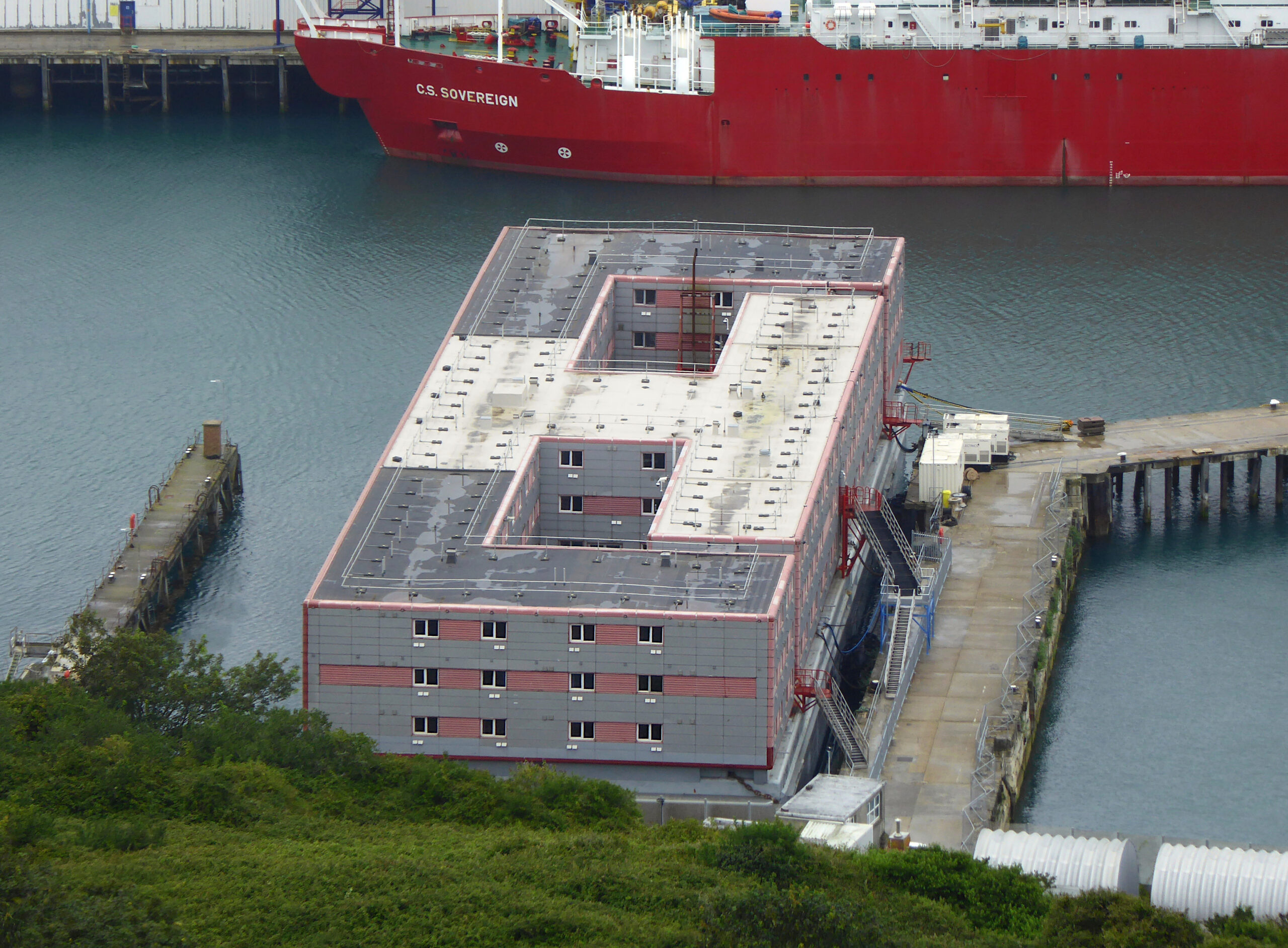
Cabins on board the Bibby Stockholm, designed for single occupancy, now have bunk beds, and people must share with strangers. Each person’s living space is smaller than the average car park bay.
OLTL media
9 November 2023
Dorset Council, responsible for health and safety on board the Bibby Stockholm barge and a member of the multi-agency forum (MAF) for the site, released the latest joint MAF update on 7 November. This revealed that asylum-seekers accommodated there are being confined to the barge as much as possible and should be deterred from getting off the bus provided to take them into local towns. The provision of the bus is a requirement of the contract between CTM and the Home Office. The latest MAF update states:
“There have also been concerns that [the bus] service means that asylum seekers are just being dropped off and left to ‘hang out’ in Weymouth and Portland. This is not happening, nor is it in anyone’s interest for it to happen. There are also be [sic] exercise, recreational and multi-faith facilities on board to minimise the need to leave the site.”
The update was signed off as usual by Paul Beecroft of the communications team at Dorset Council, with the words “Sent on behalf of the MAF group” – indicating the agreement of all MAF members. Besides Dorset Council, these include the Home Office, Portland Port, Dorset NHS, and Dorset Police. MAF meetings are held regularly, and invitees include elected members from the local authorities (town, district and county), MPs, voluntary and community sector partners, and local businesses.
Nicola David of One Life To Live, which campaigns against large-scale asylum containment sites, commented:
Image: Ashley Smith / CC BY-SA 4.0 / Bibby Stockholm at Portland Port, 2023
“Placing asylum-seekers away from communities and attempting to contain them there while restricting their freedom to move about drives a public perception that they have done something very wrong or even criminal, which inevitably and unfairly tarnishes public sentiment towards them. These asylum-seekers have done exactly what we would all do if we faced war, conflict or persecution – flee for our lives. The Bibby Stockholm residents are here legally, and they are not criminals. Therefore, there is no legal or ethical reason to segregate and contain these asylum-seekers or to restrict their freedom. This is quasi-detention, pure and simple.” What is quasi-detention? The Home Office factsheet for the Bibby Stockholm site says it provides “non-detained accommodation”. However, many campaigners, NGOs and immigration lawyers have long maintained that the barge represents quasi-detention. According to the All-Party Parliamentary Group on Immigration Detention (whose members are cross-party MPs and peers), asylum accommodation sites can be ‘accurately described’ as quasi-detention if they include:
- Visible security measures.
- Shared living quarters.
- Reduced levels of privacy.
- Isolation from the wider community.
“We have exactly the feeling of being in prison. It is true that they say that this is not a prison and you can go outside at any time, but you can only go to specific stops at certain times by bus, and this does not give me a good feeling. Even to use the fresh air, you must go through the inspection every time, go to the small yard with high fences, and go through the X-ray machine again. And this is not good for our health. In short, this is a prison whose prisoners are not criminals; they are people who have fled their country just to save their lives and have taken shelter here to live.”
Image: Ashley Smith / CC BY-SA 4.0 / Bibby Stockholm at Portland Port, 2023
Asylum seekers
















Freedom
Bookshop
Asylum seekers


Croatia: A new detention centre, but no solutions
European policies tend to support technical equipment, unreliable securitisation plans and procedures, and questionable police centres rather than new, effective, common policies on migration.
Are You Syrious?
New In











Freedom Press


















Subscribe to Freedom anarchist journal, sustain radical publishing and support independent media.
SUBSCRIBE
AND DONATE
Latest
Andy Burnham’s antidote fallacy
For all his talk of devolution, the PM’s reforms are likely to embed the state ever more intrusively in our lives
Jon Bigger
|
16 September 2026

Climate activists confront data centres
The surge of AI‑powered data centres is straining the electric grid, draining water supplies, and forcing a new wave of climate‑justice activism
Joel Sucher
Browse over a century of anarchist commentary and reporting from the Freedom digital archive
EXPLORE THE
Archives