
|
Syndicalism – a working-class conception of socialism
Taking a look into the archives of Freedom in November 1912 as a wave of militant, non-hierarchical trade unionism reached its high water mark.
Rob Ray
18 November 2022
The Freedom Newspaper of November 1912 contains an in-depth examination of syndicalism, a non-hierarchical form of union organisation which had exploded across Europe over the previous few years, manifesting in Britain as part of the Great Unrest. The following article is unsigned, but contains the hallmarks of Peter Kropotkin’s writing.
Freedom has on several occasions dealt with syndicalism, with its origin and meaning; but this movement is taking such an important development, its formulas on social justice and the economic struggle are so striking and simple, that every anarchist and socialist, as well as every trade unionist, must give his full attention to its study and propagation. For this reason we return once again to the subject. French syndicalism, which in reality is the origin of the international syndicalist movement, formulates its aims in the statutes of the French Confederation of Labour as follows.
This is part of our monthly series looking back on working class struggle in the early 1910s in the run-up to World War One, through articles found in the Freedom archive. Notes
Freedom has on several occasions dealt with syndicalism, with its origin and meaning; but this movement is taking such an important development, its formulas on social justice and the economic struggle are so striking and simple, that every anarchist and socialist, as well as every trade unionist, must give his full attention to its study and propagation. For this reason we return once again to the subject. French syndicalism, which in reality is the origin of the international syndicalist movement, formulates its aims in the statutes of the French Confederation of Labour as follows.
- To organise the wage-earners for the defence of their moral and material, their economic and professional interests.
- To organise, outside all political parties, all the workers conscious of the struggle for the abolition of the wage system and employers.
This is part of our monthly series looking back on working class struggle in the early 1910s in the run-up to World War One, through articles found in the Freedom archive. Notes
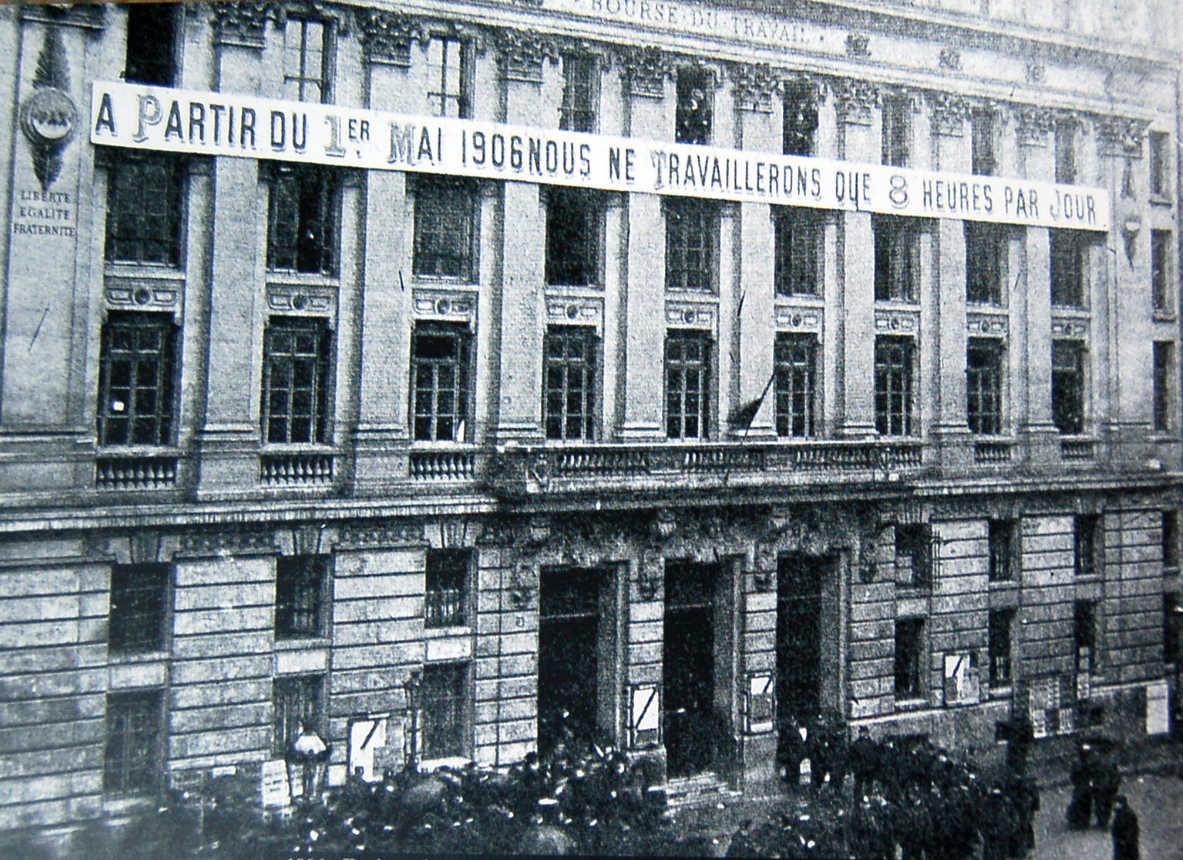
1. This is a reference to the May 1st general strike for the eight-hour day. Then-prime minister Georges Clemenceau responded by having the headquarters of the CGT searched and two union leaders, secretary Victor Griffuelhes and treasurer Gaston Lévy, arrested. Clemenceau placed Paris in a state of partial siege throughout the day, mobilising 45,000 soldiers and having more than 800 demonstrators arrested. Related strikes broke out and persisted until from May 4th-15th in Paris and Lyon.
Britain








Freedom
Bookshop
1910s

New In










Freedom Press



Subscribe to Freedom anarchist journal, sustain radical publishing and support independent media.
SUBSCRIBE
AND DONATE
Latest
Churchill vandalism case win, and thoughts on masked fash
Anarchist News Review: Andy, Tab and Simon hail some good news for pigeons as a jury throws out the infamous Churchill statue vandalism case.
Freedom News
|
18 September 2026

Autistici/Inventati: “We need 1,000 more infrastructures of dissent to be born”
Interview with the Italian digital collective, de-banked and shut down after US “terrorist” designation
Gabriel Fonten
Browse over a century of anarchist commentary and reporting from the Freedom digital archive
EXPLORE THE
Archives