
|

Remembering Murray Bookchin
Twenty years after his death, the founder of Social Ecology and Libertarian Municipalism remains both influential and controversial. His legacy for anarchism is the subject of three articles today.
Fabio Carnevali
30 July 2026
Murray Bookchin was one of the most relevant voices in the ecological debate all throughout the second half of the 20th century, combining deep philosophical, anthropological and historical knowledge on the one hand, and some brilliant political insights on the other hand. His intellectual biography is a complex one, merging intellectual and militant engagement, and ranging from syndicalism to Trotskyism, and later anarchism. Importantly, he developed the concept of social ecology, for which he is best known. The many polemics in which he was involved made him a controversial figure in the anarchist movement, but the relevance and originality of his contributions are out of question.
From Marxism via anarchism to communalism
Murray Bookchin’s political engagement starts at a very young age, under the influence of the socialist ideas that his grandmother taught him since he was a kid. As a 15-year-old, he tried to enlist for the Spanish Civil War and got refused because of his young age. As a young factory worker, he was engaged in syndicalist struggles, and broke with his Stalinist political affiliation before turning 20. He embraced Trotskyist ideas and joined the Socialist Workers Party and the United Electrical Workers while working at General Motors. In the early ‘50s, he started to get interested in ecological issues and wrote his first essays under the pseudonym Lewis Herber in order to avoid McCarthyistic repression. At the end of the 1950s, he considered himself an anarchist, and a few months earlier than Rachel Carson’s seminal work Silent Spring, he published Our Synthetic Environment. During his anarchist years, he developed the concept of social ecology, which would shape his thinking for the rest of his life. He broke with anarchism during the 1990s because of what he considered a primitivist, individualistic turn in the movement – a critique that is addressed in his 1995 book Social anarchism or Lifestyle anarchism. In his late years, he coined the notion of communalism, that can be considered his last intellectual and political turn.
Social ecology and post-scarcity
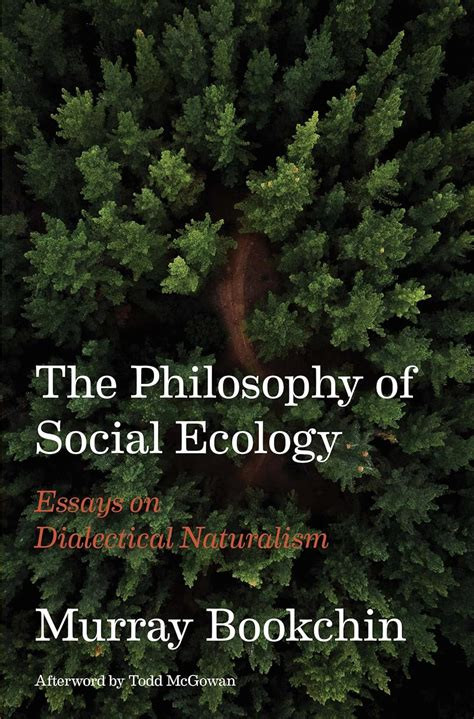
Bookchin’s main theoretical contribution to ecological thinking is undoubtedly the notion of social ecology. In a time when the deep ecology movement was dominant in the USA, Bookchin proposed an idea of ecology centred on social critique, arguing that domination over nature is a result of social hierarchies, and that in order to overcome the former, we need to uproot the very basis of social domination. If it does not comprehend social critique, ecology is just a moral concern at best, and a collection of “green” technologies that perpetuate oppression. Ecology is social in that it needs to address the way in which society (or second nature) is the outcome of natural evolutionary development (or first nature). This makes it possible for him to maintain that all forms of societal relation to nature are in fact political. Every human society is always situated in the context of an eco-community that encompasses non-human life as well as inorganic systems that support life.
Bookchin thought that an ecological society and politics should ground in cooperation and mutualism its actions, because mutual aid and solidarity are not simply ethical values, but they are also the best evolutionary strategy. In this sense, he followed a path that was well outlined by Élisée Reclus and Peter Kropotkin. According to Bookchin, nature provides us with enough resources and with an outstanding rationality that makes us capable of developing ecological technologies that would allow everyone to live a dignified life, one that is free from the production of needs and can focus instead on liberated desire. This thesis is at the heart of his notion of post-scarcity – a notion that he links to anarchism and ecology in the book Post-scarcity anarchism. The alternative we are facing, he says, is no longer socialism or barbarism; it is rather anarchism or annihilation.
Libertarian municipalism and the Rojava struggle
The politics of social ecology is libertarian municipalism, a form of stateless politics based on decentralisation, direct democracy and a general rethinking of urbanisation and of the organisation of work. Bookchin’s views on such themes lead him to argue not only for decentralization at an institutional level – which is nonetheless one important tenet of libertarian municipalism – but also on a geographical level, maintaining that large cities should be decentralized into «humanly scaled communities», that would allow for local democratic assemblies to have direct control over cities and common natural resources. Bookchin’s ideas on libertarian municipalism were partially absorbed and adapted to the Kurdish context by Abdullah Öcalan during his prison years. Öcalan developed his democratic confederalism, which was eventually implemented in Rojava after the revolution in 2012. During Bookchin’s last years, an attempt was made to organise a visit to the Imrali island where Öcalan is imprisoned, but Bookchin’s poor health did not allow for that.
Bookchin died on 30 July 2006, and could not witness the Rojava revolution. In the 20th anniversary of his death, writing about him gives us the opportunity to remember the huge impact of his ideas, and to emphasise once again the link between ecological and social oppression and liberation.
Thinkers




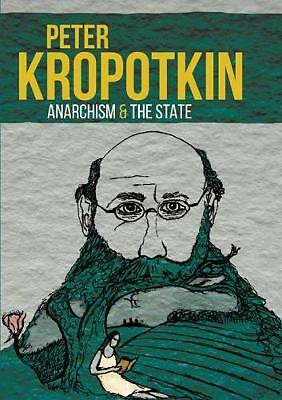
Freedom
Bookshop
Thinkers


Alexander Berkman on prisons and abolition
His arguments are no less salient in the face of contemporary threats
Søren Hough
New In







Freedom Press



Subscribe to Freedom anarchist journal, sustain radical publishing and support independent media.
SUBSCRIBE
AND DONATE
Latest
Creating the conditions for anarchy
The road to liberation is long and arduous, but it can be taken step by step through education, non‑violent direct action, and a collective commitment to human flourishing
E.
|
15 September 2026

The Right Stuff
The Dover blockade temporarily succeeded in its aim of grabbing headlines, causing local and national economic damage, and intimidating, indeed terrorising
Tabitha Troughton
Browse over a century of anarchist commentary and reporting from the Freedom digital archive
EXPLORE THE
Archives