
|
Climate protests: Harsh sentencing is here to stay
Despite reduced prison terms, the Court of Appeal clearly indicated the end of leniency for conscientious disruption
Andy Meinke
10 March 2025
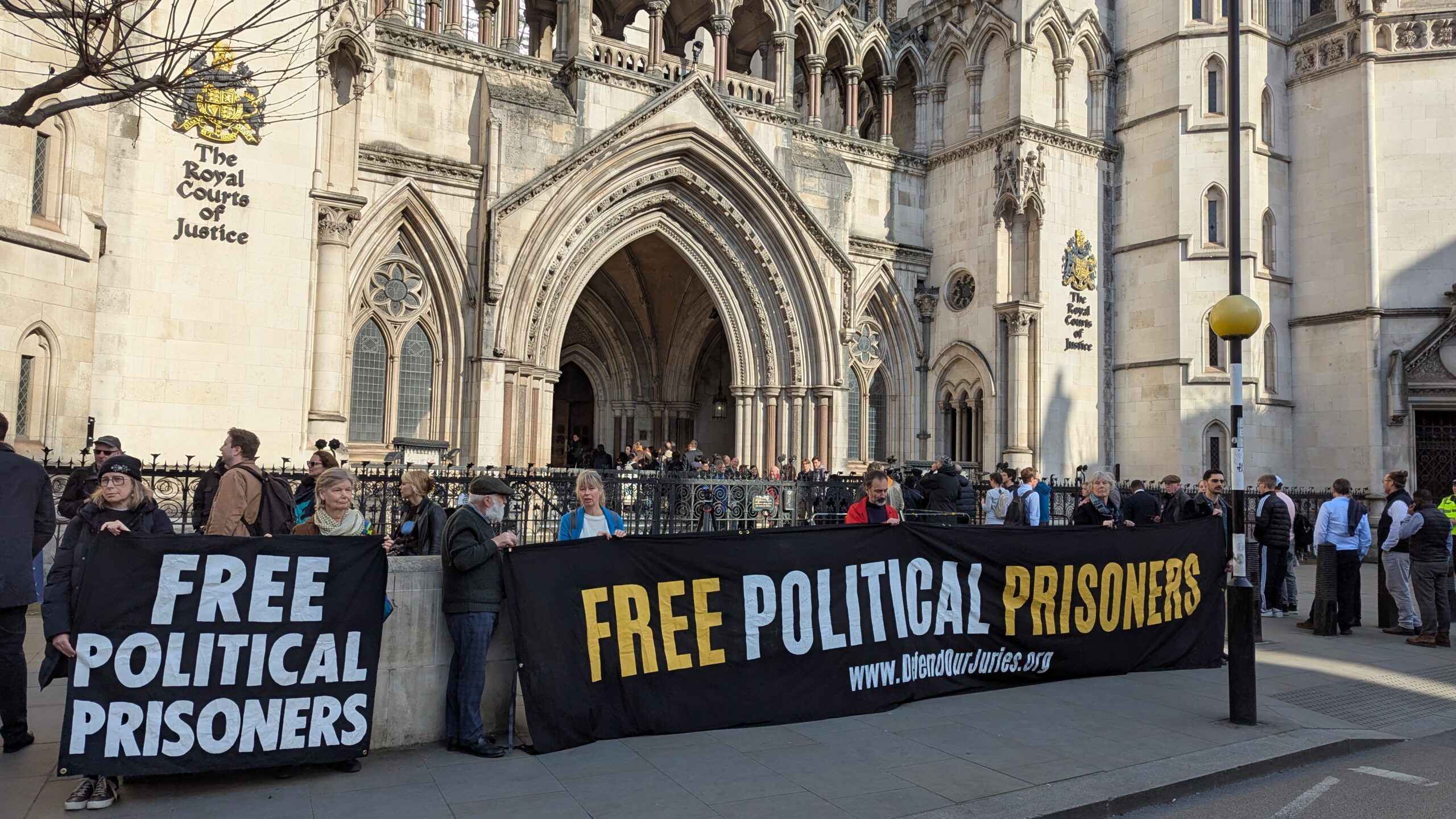
After Just Stop Oil and Insulate Britain protesters received harsh sentences, activists and their legal teams—ten counsel in court and many more working in the background— trooped to the Royal Courts of Justice in the Strand seeking, well, Justice. Their valiant effort has led to this Judgement, in which the Court, presided over by the UK’s top judge (Lord Chief Justice, Lady Carr) not only reviewed a number of recent sentences but set out principles to be followed by lower courts in future.
Let’s start with the good news. The Court of Appeal did recognise that trespassing does not mean that you were not exercising your Article 10 and 11 rights to freedom of expression and assembly. Use of violence is the test that puts you beyond the protection of Human Rights considerations and while damage to property can be violent, as with the Colston Statue case, throwing soup on the Sunflowers painting is not, in the learned opinion of the court, violence. Yay!
Six of the sixteen have had their sentences reduced. 37.5% is way above the normal batting average at the Court of Appeal. Judge Herir of Southwark Crown in particular had 5 of his 7 sentences reduced for being ‘manifestly excessive’—the threshold test for the Court to alter a sentence. They can’t change it because they think it severe or would have given less themselves; it has to be really waaay too much. That’s five and four year terms knocked down to four, three and two and a half years, or 21 to 15 in total. A year off all five’s sentences because Judge Herir got carried away with ‘sentence inflation’ and two people with a bonus 6 month reduction for having their personal mitigating circumstances ignored ain’t to be sniffed at. And again a better than normal cut as the CACD (Court of Appeal Criminal Division) is better known for salami-thin adjustments.
The other reduction was one of two months, from 20 to 18, simply because the trial Judge had overlooked their being on a curfew for 147 days. They would have been entitled to another two weeks off if they’d been on tag but had to have it removed for medical reasons. Unlucky that.
As to the wider picture—it’s not so rosy.
In the judgement, the Lady Chief sets out the underlying principles to be applied to peaceful protestors. I paraphrase for clarity and avoidance of legal jargon.
i) Normal Sentencing procedures apply. There’s no set percentage off for being a ‘Conchy’. Acting from conscientious motives does affect your Culpability when determining a sentence, but the worse the crime the less it matters and for Public Nuisance that’s diddly-squat.
ii) Read what I wrote in Trowland (Marcus Trowbridge of the Dartford Crossing case judgement) you cloth eared hippy do-gooders. The soft days for beatnik agitators are over, got that? OVER!
iii) Don’t try complicating things with loads of Human Rights Law and European Court cases ‘cos it ain’t gonna wash. Parliament brought in the new Public Nuisance law to pot JSO and Insulate Britain types, and to jail they will go.
iv) Don’t keep harping on about how long Marcus got. It’s not a benchmark or tariff. Protest cases will each be sentenced on their particular circumstances.
The remainder of the Judgement goes through the individual cases and individuals in detail. There’s some grudging admission of the value of protest, “peaceful only in so far as it was non-violent”, but we can’t expect any real understanding till the waves are lapping in the Strand.
Among innovative arguments for the appellants we had this. Some readers may be familiar with the Aarhus Convention and the UN Special Rapporteur’s critique of the heavy sentences dished out to climate protestors in this island. If you are not, don’t worry too much about it as the Lady Chief says it’s totally irrelevant and as for Monsieur Forst, only the depth of government cuts prevents her purchasing a juicy wet haddock to slap him round the chops with on his forthcoming visit.
It is possible to have an appeal from the Court of Appeal to the Supreme Court. But here’s the catch. The Court of Appeal has to agree, or certify it as an important issue of law to be formal. They’re only likely to do so if confident their opinions will be confirmed. With Lord Reed, the president, waiting eagerly to correct that Court’s lenient lapse in Ziegler, which led to numerous protestors being acquitted, that might not be too promising.
Photo: Jamie Lowe
Photo: Jamie Lowe
Repression











Freedom
Bookshop
Court of appeal

New In









Freedom Press




Subscribe to Freedom anarchist journal, sustain radical publishing and support independent media.
SUBSCRIBE
AND DONATE
Latest
Churchill vandalism case win, and thoughts on masked fash
Anarchist News Review: Andy, Tab and Simon hail some good news for pigeons as a jury throws out the infamous Churchill statue vandalism case.
Freedom News
|
18 September 2026

Autistici/Inventati: “We need 1,000 more infrastructures of dissent to be born”
Interview with the Italian digital collective, de-banked and shut down after US “terrorist” designation
Gabriel Fonten
Browse over a century of anarchist commentary and reporting from the Freedom digital archive
EXPLORE THE
Archives