
|
A locked-down walk
George Wilson
9 October 2022
During the break from lockdown in Summer 2020 a friend and I went to Southend to take a break from the city. It was interesting for lots of reasons, from the strange non-strangeness of throngs parading along the beach/riverside, to exploring the town’s semi-faded attractions.
What stood out to me though was a walk we took to its north, out of Great Wakering. It was an interesting trek, in good company, and I’m glad I did it, but its lessons are primarily dystopian.
We decided to head up towards Potton Island which looked happily short on people. This should, in retrospect, have been a tip-off. Nowhere this close to the machine would be empty by accident. Nevertheless, we trooped out on a fearsome sunny day to have a look round.
Just outside the village lies a series of fields which are vast, half a kilometre on a side. Paths lead around their edges, but no hedges or trees mark them or prevent hot winds from pounding through, blowing good earth into your face as it flees from the farmer’s “care” towards river and sea. Not a soul was to be seen, and why would there be? There’s little of interest, just flat ground and the intimidating scale of modern monoculture.
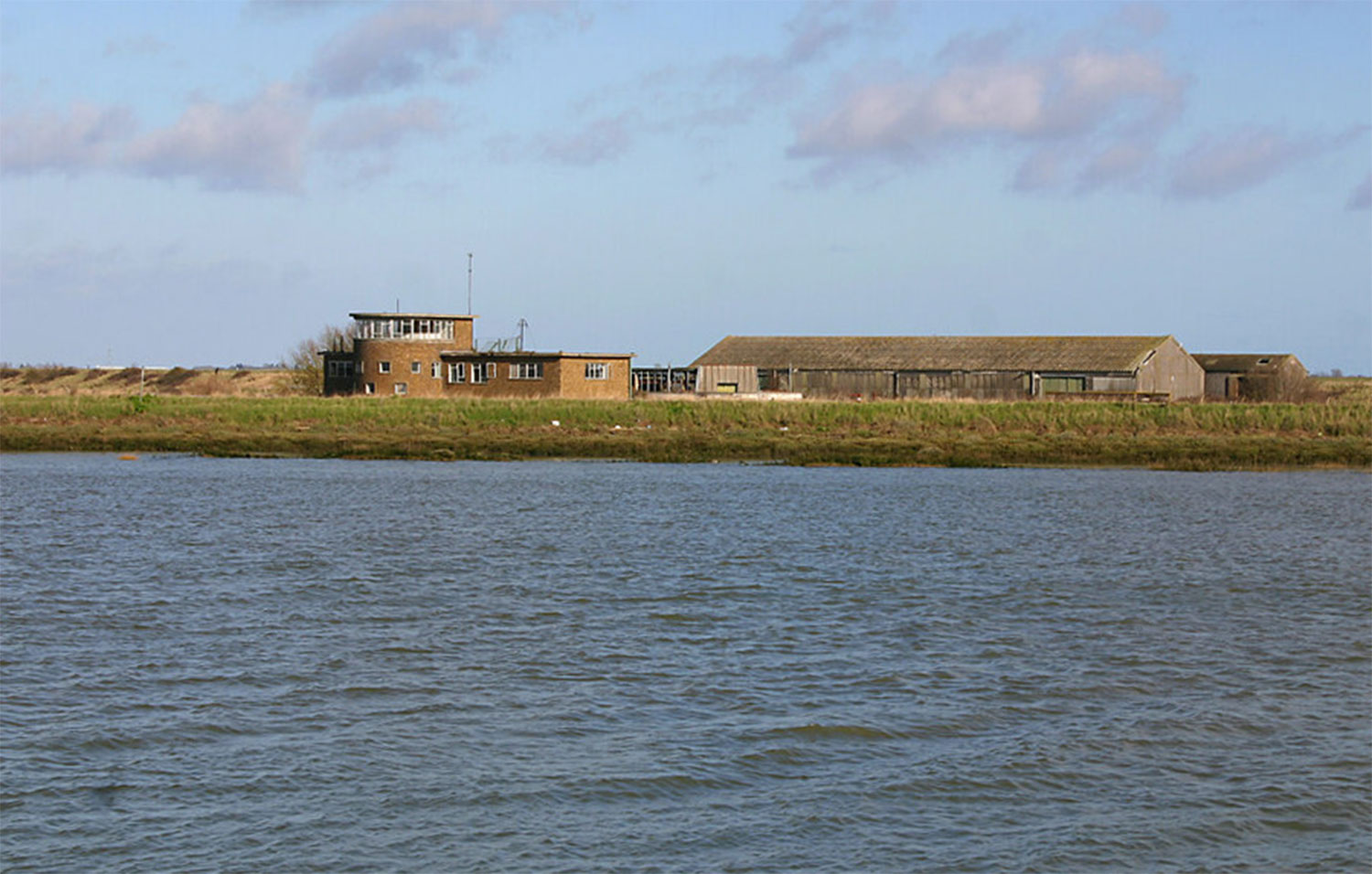
I was sweating by the time we’d walked maybe a kilometre through this patch of unshaded nothing, reaching the end of the track onto a sharp left turn, tarmacked road leading past what, on the map, looked like some kind of private fishing firm and onwards to a bridge, to take us across the river and onto the island.
Except it didn’t. We got to the crossroads alright. Unlisted on the map, however, was a bloody big gate. And on that gate it warned sternly: “KEEP OUT. MoD.” Unbeknownst to Google Maps (or possibly “forgotten” by diktat) the entire island, about the size of Basildon, was signposted as being off limits.
So, already hot from an unexpectedly scorching day, we admitted defeat and tried a different path. We stumbled onto the edge of another field, and courted sunstroke to trespass around its edge towards Great Wakering’s sibling, Little. Parched and rapidly tiring, we walked alongside neat fencing between the village and What The Farmer Owns. And glory of glories, in Little Wakering we found an ice cream shop which marked, mostly, the end of our day’s travails.
I’ve been reading the Book of Trespass recently, and this walk came to mind while I took in Nick Hayes’ ponderings on the enclosures. Not just because it’s an example of exactly how hostile our territorial laws and industrialised, militaristic attitudes are towards anyone wishing to wander around the world we share. But because even in south Essex, as connected a plain as any in England, it’s not a long walk before you find yourself in the lands of the rich where you have few paths to tread, and your presence is tangibly neither needed nor wanted.
In his Pheasant chapter, Hayes writes about the many confrontations that took place in the 18th century over our right to share the Earth’s common bounty. Back then it was poaching, villagers “stealing” the landowner’s game. Today it’s simply looking, because the ruling class has physically pushed the riffraff so far from its boundaries that the possibility of anything else barely even occurs. Picturesque villages are mostly filled with the comfortable middle classes, agricultural workers long since having been forced out, and what need have they to “steal” wood for a fire or a rabbit for the pot? The poor could, in theory, get out to such a spot, but to what end? The effort would cost more than the reward.
The other day a headline passed my desk which really struck me. It went ‘Bread costs are soaring out of reach of families.’ The return of a news item which, back in the 18th century, would herald talk of guillotines. Except today, unlike in pre-revolutionary France, the poor are almost all in cities and market towns, looking for work that mostly no longer exists in the fiefdoms of the countryside. They live within a 24/7 CCTV panopticon, poaching is from Primark, while starving and decaying is mostly done on paving slabs far from any field. The game, the woodlands, the resources of the manor are too remote, too alien to spend a moment’s thought on.
The rich and powerful are thus free to scar and pillage the land, sharing nothing, and for the most part we will never be let near enough to see it.
After our walk I looked up Potton Island to find out a bit more about it. The most notable thing was that John Major’s government, in the ‘90s, considered using it to dump high-level nuclear waste. They didn’t bother to tell the local council.
This is the sort of thing our self-described betters like to stylise as “stewardship of the land.”
~ George Wilson
This article first appeared in the Summer-Autumn edition of Freedom journal, available at our online shop for the cost of postage. Pic: David Kemp
This article first appeared in the Summer-Autumn edition of Freedom journal, available at our online shop for the cost of postage. Pic: David Kemp
Land ownership




Freedom
Bookshop
Land ownership

New In







Freedom Press



Subscribe to Freedom anarchist journal, sustain radical publishing and support independent media.
SUBSCRIBE
AND DONATE
Latest
Churchill vandalism case win, and thoughts on masked fash
Anarchist News Review: Andy, Tab and Simon hail some good news for pigeons as a jury throws out the infamous Churchill statue vandalism case.
Freedom News
|
18 September 2026
Autistici/Inventati: “We need 1,000 more infrastructures of dissent to be born”
Interview with the Italian digital collective, de-banked and shut down after US “terrorist” designation
Gabriel Fonten
Browse over a century of anarchist commentary and reporting from the Freedom digital archive
EXPLORE THE
Archives