
|
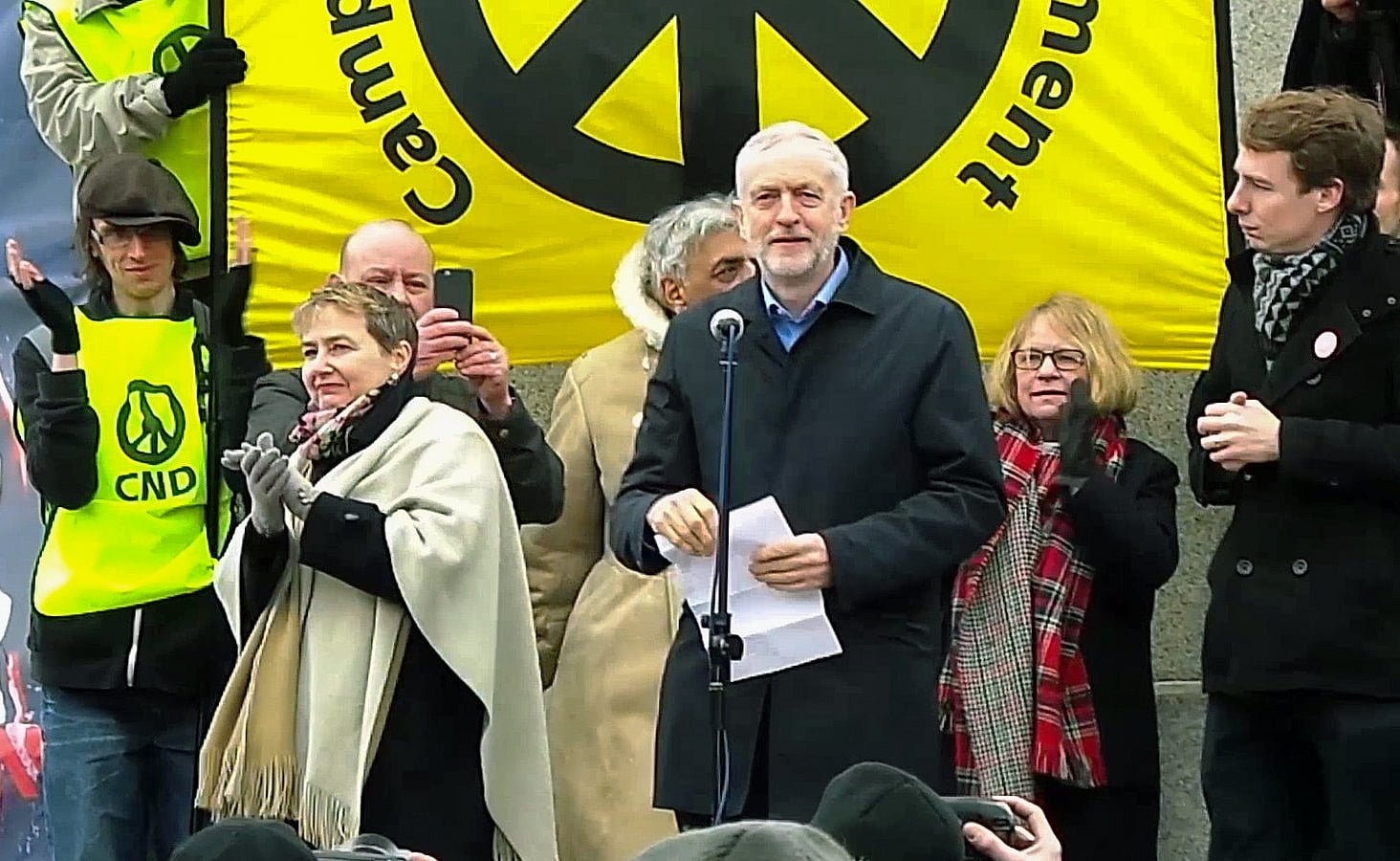
As the shine rubs off Labour, what next?
Rob Ray
8 July 2019
The Autumn of 2015 and the election
of Jeremy Corbyn as Labour Party leader was as much of an earthquake
for the anarchists as it was for what is now known as the “centrist
tinge” of party politics.
As a movement, we had benefited
somewhat from the years of Blair, Brown and Miliband. Our street
activity made big strides forward in the ’90s and early 2000s
before falling back, but even after that we were able to make an easy
argument that Labour was merely shades of Tory in the way it thought,
acted and produced policy.
With the ascent of an actual
capital-L Leftist to the top job of Labour leader however this line
was, at least temporarily, stripped away. We were back to more
complex and difficult arguments around the ultimate limitations of
reformist politics, and how the logics of representative democracy
warp and shorten our horizons over time.
For those of us following party
affairs the situation seemed cosmically unlikely from the start, and
Corbyn’s success blindsided most of us.
The MP for Islington North is, from
the anarchist vantage point, very much a known and limited quantity.
Mostly a good egg, but the quintessential grandee of “cobweb
leftism” who dreams of reinstituting the glory days of a Keynesian
social-democratic Britain that a) never quite happened in the form
he’d prefer to portray and b) rested on a foundation that no longer
exists.*
Beyond that, the mix of Trots,
Tankies and frequently problematic “anti-imperialists” who had
spent previous decades backing such “socialist titans” as Bashir
Assad or Colonel Gaddafi that he frequently rode with were a massive
liability.**
His Parliamentary mates were
similar. John McDonnell was smarter, but harsher and not as likeable.
Diane Abbott was all over the place, from private-schooling her kids
to public lauding of Chairman Mao. Dennis Skinner was an entertaining
but sidelined grouch. They’d been taking turns for years to “put
up a left voice” for leadership and been crushed on every occasion.
At best Corbyn represented a return
to the ungainly plod of a back-to-basics Labour, but terminally
stretched by internal divisions, with no workers’ power to
underline policymaking and placed within a fully-entrenched form of
aggressive neoliberal capitalism.
So what made things different this
time?
There were some electoral factors,
such as Ed Miliband’s voting rule changes, but in short, “time”
was the biggest influence of all. Broadly, the working class had been
on the back foot for more than four decades. Labour had been
post-Kinnock centre-right for most or all of that period. The left’s
last serious victory had been the Poll Tax, and things had gotten so
bad that even welfare-baiting warmonger Tony Blair was initially
heralded as a turn towards progressive politics.
Every “far” left tendency had
been in decline for years, most notably the Leninists, while
anarchist ideas, despite several surges in popularity, hadn’t
resulted in a stable power base capable of offering a serious
grassroots alternative.
For millions of socialists and
vague/old leftists who had been relentlessly sidelined, a possibility
of rebuilding the Labour Party left thus represented the only shaft
of light in what had been a gloomy few decades. Many, if not most, of
the people who shifted over, from Communist Party types to former
Trots and reactivated old Labour activists, not to mention a number
of anarchists, were speaking in terms of TINA—there is no
alternative.
The most familiar refrain being
offered to anarchists who stayed out of the new Corbynism was that
people knew it was a sticking plaster approach, but even limited
change was better than another decade of retreat. And maybe it would
shift the tone of the national conversation. It was all about
Momentum, so to speak.
Added to this was the nature of
Corbynism itself, an appeal to socialism that through its initial
stages revelled in malleable vagueness. Anarchist entrants, later
unkindly referred to as “anarcho-Corbynistas” were offered a
platform that gave them a nod and a wink on a host of issues from
nuclear disarmament to mass migration and the environment.
And for the first year or two, it
seemed as though the left might be onto something. Corbyn had a
pretty blameless record as the only leadership contender to have led
Stop The War and had years of pro working class, anti-bigotry
activism on his CV. He was lent further street cred as the Tories and
their allies went absolutely ballistic, accusing him of everything
from IRA conspiracies to having Soviet gold in his pocket.
Leftists, particularly those young
enough to have never known a time when Labour wasn’t run by the
sort of scumbag who’d throw claimants under a bus to look “tough”
on the non-issue of welfare cheating, were able to project almost
anything on this besieged, part-formed entity. Through Momentum and
gatherings such as The World Transformed many people were introduced
to the hothouse of party political intrigue for the first time, and
that surge in energy felt like change.
The result for anarchism was a
notable draining of activists into reinvigorated Constituency Labour
Parties, local organs of the organisation that had for years been
little more than powerless cheerleading squads for the Parliamentary
Labour Party.
In our chatrooms, social media and
pub conversations this caused a mix of consternation, debate and
sometimes, nasty arguments. Exactly how anarchists should respond to
Corbyn was unclear and the spectrum of opinion went from outright
hostility to him, through interest and engagement (more or less
distant) with “where the class is”, to the opposite extreme of
people denouncing their old viewpoints entirely and adopting the
aggression of the recently converted.
So what made things different this
time?
There were some electoral factors,
such as Ed Miliband’s voting rule changes, but in short, “time”
was the biggest influence of all. Broadly, the working class had been
on the back foot for more than four decades. Labour had been
post-Kinnock centre-right for most or all of that period. The left’s
last serious victory had been the Poll Tax, and things had gotten so
bad that even welfare-baiting warmonger Tony Blair was initially
heralded as a turn towards progressive politics.
Every “far” left tendency had
been in decline for years, most notably the Leninists, while
anarchist ideas, despite several surges in popularity, hadn’t
resulted in a stable power base capable of offering a serious
grassroots alternative.
For millions of socialists and
vague/old leftists who had been relentlessly sidelined, a possibility
of rebuilding the Labour Party left thus represented the only shaft
of light in what had been a gloomy few decades. Many, if not most, of
the people who shifted over, from Communist Party types to former
Trots and reactivated old Labour activists, not to mention a number
of anarchists, were speaking in terms of TINA—there is no
alternative.
The most familiar refrain being
offered to anarchists who stayed out of the new Corbynism was that
people knew it was a sticking plaster approach, but even limited
change was better than another decade of retreat. And maybe it would
shift the tone of the national conversation. It was all about
Momentum, so to speak.
Added to this was the nature of
Corbynism itself, an appeal to socialism that through its initial
stages revelled in malleable vagueness. Anarchist entrants, later
unkindly referred to as “anarcho-Corbynistas” were offered a
platform that gave them a nod and a wink on a host of issues from
nuclear disarmament to mass migration and the environment.
And for the first year or two, it
seemed as though the left might be onto something. Corbyn had a
pretty blameless record as the only leadership contender to have led
Stop The War and had years of pro working class, anti-bigotry
activism on his CV. He was lent further street cred as the Tories and
their allies went absolutely ballistic, accusing him of everything
from IRA conspiracies to having Soviet gold in his pocket.
Leftists, particularly those young
enough to have never known a time when Labour wasn’t run by the
sort of scumbag who’d throw claimants under a bus to look “tough”
on the non-issue of welfare cheating, were able to project almost
anything on this besieged, part-formed entity. Through Momentum and
gatherings such as The World Transformed many people were introduced
to the hothouse of party political intrigue for the first time, and
that surge in energy felt like change.
The result for anarchism was a
notable draining of activists into reinvigorated Constituency Labour
Parties, local organs of the organisation that had for years been
little more than powerless cheerleading squads for the Parliamentary
Labour Party.
In our chatrooms, social media and
pub conversations this caused a mix of consternation, debate and
sometimes, nasty arguments. Exactly how anarchists should respond to
Corbyn was unclear and the spectrum of opinion went from outright
hostility to him, through interest and engagement (more or less
distant) with “where the class is”, to the opposite extreme of
people denouncing their old viewpoints entirely and adopting the
aggression of the recently converted.
What happens to fresh milk
Since that process in the 2015-17
period however, even with the added draw of defeating coups and the
endless fascination of internecine battles to rely on, an iron rule
of Parliamentary politics has come into play. Eventually the milk
always turns sour.
With Corbyn this has been a faster
process than perhaps could have been predicted, but it has
nevertheless left plenty of room to accommodate that cliche of party
political activism, the acceptance of policies which would once have
been anathema in the name of a “larger goal”.
Certain elements of this decline
from the heady heights of rebellious Corbynist principle were present
almost from the start. Corbyn’s quiet acceptance of NATO after a
lifetime of opposition to it took place as early as 2015, when he
downgraded to an (easily buried) call for “debate”. Since then he
has let slide on a wide range of former “red line” positions,
from migration and Trident to taxation and Europe. Most of Labour’s
policies today aren’t far removed from the party’s centre-left
orthodoxy under Ed Miliband.
The logic, of course, is that it is
better to jettison what you cannot win to make progress where you
can. If Labour has to appease the public sphere’s migrant obsession
by promising it won’t let them be used to “undermine working
conditions”, well, any hurt caused will only be to non-voters. The
important thing is that its overall electoral prospects aren’t
dented, so eventually a (fiscally responsible) nationalisation or a
(sensibly budgeted) tax rise can be pushed through here or there.
Even if Corbyn himself is not personally in favour of such maths,
they’re part of how the party must act in order to function.
It is the same logic which has
driven every social democratic party since the 19th century, and
which has in the 119 years since Labour was founded seen it progress
from a call to overturn laws which were strangling trade unions while
promoting massive nationalisation of industry to … a bit less than
the same today.
Except now the TUC unions are
increasingly zombie organisations, nationalisation can no longer be
pretended to as a cure-all, and despite recent setbacks the agenda of
the party right is still hugely influential. Blair-era staffers still
hold the reins across much of the administrative machinery, and the
grinding battle to replace them has put off many enthusiastic new
faces. Labour’s famed Clause IV calling for the common ownership of
industry for example, torched during the Blair years, seems unlikely
to make a full reappearance.
And this settling into day-to-day
realpolitik simply isn’t as sexy as “we’re taking over”, nor
is it such a shiny prize for the far left when important principles
are sloughing off the docket before a majority has even been secured.
What instead?
For anarchists, an important trend
we may be starting to see is the beginnings of political drift.
Anecdotally, more people are showing an interest in anarchism again,
particularly in the absence of a Leninist left which has leapt in
with both feet to try and Win for Corbyn and is weak on its own
account.
The anarchist movement itself
however is not in great shape. We’ve been poorly served by the last
decade as we’ve only partially progressed in reconciling relatively
new, influential ideals about fighting intersecting social
oppressions with our far older base politics.
The collapse of our biggest annual
gathering the London Anarchist Bookfair in 2017 highlighted
deeply-felt disagreements which have been worsened by generational
differences in how we engage with our politics. We have minimal
resources to work with and a modern cohort seemingly primed to
squabble rather than coalesce.
But the need for a grassroots
resurgence is stronger than it has ever been. The single greatest
failure of the Corbyn project in fact has been in the promises made
during its initial recruitment drive—that throwing in for Labour
and rebuilding community and worker power could be one and the same
fight.
This was always a claim to side-eye,
and the last four years have broadly seen, rather than a resurgence,
a further decline in regular trade union activity and community
rebellion. Some former activists have picked up council roles and
found themselves administering cuts, waiting for the Promised Land of
change at Westminster to arrive while mirroring the actions of the
very people they used to oppose.
With a government which is the
weakest-positioned in modern history, a ransacking of cities, public
services and people’s working conditions by the rich continues.
Buried has been homelessness, poverty, torn up safety nets, declining
estates, healthcare crises.
Corbyn may ask his questions at
PMQs, or even become Prime Minister himself, but what actually forces
Westminster’s priorities is what happens out here, in the world
beyond London SW1. Which is where anarchist thought shines. Standing
for independent activity which doesn’t rely on politicians, for
direct action to make things happen, and for ways of organising which
don’t continually produce an elite of know-alls telling us to let
them sort it out.
There are two key factors in our
engagement with today’s political mess. First is that clearly
popular engagement with Labour does not produce the sort of
independent activism needed to directly challenge Tory misrule or
bosses’ greed. Momentum was supposedly founded expressly to produce
these outcomes and has mobilised nothing but door-knocking on
election days.
Second is that there have been
multiple examples of groups springing up and being effective which
have happened despite Labour, rather than because of it. Base unions
such as the UVW, IWGB, and IWW, aimed at protecting precarious
workers left behind by the mainstream TUC, have been growing at a
remarkable pace, and winning regardless of who occupies Number 10.
Community and green action groups have made headlines and pushed
policy change with little practical help from party brass.
There are green shoots of
extra-Parliamentary activity to point to, and for all that we have
limited resources there is a wealth of experience and history we can
call on to inform and improve the next phases of a revival. The
potential is here. The key will be in how we deal with the messy
realities of mass rebellion.
The greatest waves of post-war
anarchistic activity in Britain were the 1960s and around the
Millennium. In the former, there was an attempt to focus anarchist
ideas into federations, which often foundered through a lack of
strategy and discipline. In the 1990s and 2000s the State, which had
learned much about how to disrupt political movements in previous
decades, intervened effectively to break up, repress and misdirect
movements as they grew.
The lessons of those periods will be
vital to learn and remember over the next phase of Britain’s
political journey.
Rob Ray
* Exploiting the tail end of empire
is no longer an option open to Britain, and its government no longer
has enough economic or military heft to really stand up to the
agendas of national and corporate superpowers. The trade unions and
organised communities that once forced progressive policies were
smashed in the 1980s and ’90s, while the neoliberal shift which
accompanied that change affected the very logic of how society is
collectively understood on a global level.
** It was this set’s extremely
variable background on Palestine solidarity that later became
weaponised as “Labour’s anti-Semitism problem”. While much of
the related media campaign was overblown (and deeply hypocritical),
unaddressed anti-Semitism embedded in the pro-Palestine left
sometimes was, and still is, a troubling reality.
What instead?
For anarchists, an important trend
we may be starting to see is the beginnings of political drift.
Anecdotally, more people are showing an interest in anarchism again,
particularly in the absence of a Leninist left which has leapt in
with both feet to try and Win for Corbyn and is weak on its own
account.
The anarchist movement itself
however is not in great shape. We’ve been poorly served by the last
decade as we’ve only partially progressed in reconciling relatively
new, influential ideals about fighting intersecting social
oppressions with our far older base politics.
The collapse of our biggest annual
gathering the London Anarchist Bookfair in 2017 highlighted
deeply-felt disagreements which have been worsened by generational
differences in how we engage with our politics. We have minimal
resources to work with and a modern cohort seemingly primed to
squabble rather than coalesce.
But the need for a grassroots
resurgence is stronger than it has ever been. The single greatest
failure of the Corbyn project in fact has been in the promises made
during its initial recruitment drive—that throwing in for Labour
and rebuilding community and worker power could be one and the same
fight.
This was always a claim to side-eye,
and the last four years have broadly seen, rather than a resurgence,
a further decline in regular trade union activity and community
rebellion. Some former activists have picked up council roles and
found themselves administering cuts, waiting for the Promised Land of
change at Westminster to arrive while mirroring the actions of the
very people they used to oppose.
With a government which is the
weakest-positioned in modern history, a ransacking of cities, public
services and people’s working conditions by the rich continues.
Buried has been homelessness, poverty, torn up safety nets, declining
estates, healthcare crises.
Corbyn may ask his questions at
PMQs, or even become Prime Minister himself, but what actually forces
Westminster’s priorities is what happens out here, in the world
beyond London SW1. Which is where anarchist thought shines. Standing
for independent activity which doesn’t rely on politicians, for
direct action to make things happen, and for ways of organising which
don’t continually produce an elite of know-alls telling us to let
them sort it out.
There are two key factors in our
engagement with today’s political mess. First is that clearly
popular engagement with Labour does not produce the sort of
independent activism needed to directly challenge Tory misrule or
bosses’ greed. Momentum was supposedly founded expressly to produce
these outcomes and has mobilised nothing but door-knocking on
election days.
Second is that there have been
multiple examples of groups springing up and being effective which
have happened despite Labour, rather than because of it. Base unions
such as the UVW, IWGB, and IWW, aimed at protecting precarious
workers left behind by the mainstream TUC, have been growing at a
remarkable pace, and winning regardless of who occupies Number 10.
Community and green action groups have made headlines and pushed
policy change with little practical help from party brass.
There are green shoots of
extra-Parliamentary activity to point to, and for all that we have
limited resources there is a wealth of experience and history we can
call on to inform and improve the next phases of a revival. The
potential is here. The key will be in how we deal with the messy
realities of mass rebellion.
The greatest waves of post-war
anarchistic activity in Britain were the 1960s and around the
Millennium. In the former, there was an attempt to focus anarchist
ideas into federations, which often foundered through a lack of
strategy and discipline. In the 1990s and 2000s the State, which had
learned much about how to disrupt political movements in previous
decades, intervened effectively to break up, repress and misdirect
movements as they grew.
The lessons of those periods will be
vital to learn and remember over the next phase of Britain’s
political journey.
Rob Ray
* Exploiting the tail end of empire
is no longer an option open to Britain, and its government no longer
has enough economic or military heft to really stand up to the
agendas of national and corporate superpowers. The trade unions and
organised communities that once forced progressive policies were
smashed in the 1980s and ’90s, while the neoliberal shift which
accompanied that change affected the very logic of how society is
collectively understood on a global level.
** It was this set’s extremely
variable background on Palestine solidarity that later became
weaponised as “Labour’s anti-Semitism problem”. While much of
the related media campaign was overblown (and deeply hypocritical),
unaddressed anti-Semitism embedded in the pro-Palestine left
sometimes was, and still is, a troubling reality.
Anarchism














Freedom
Bookshop
Anarchism


Interview with Rouvikonas
During a summer break in the south, Freedom grabbed the opportunity to interview the Anarchist Collective Rouvikonas in Athens
Blade Runner
New In










Freedom Press







Subscribe to Freedom anarchist journal, sustain radical publishing and support independent media.
SUBSCRIBE
AND DONATE
Latest
Churchill vandalism case win, and thoughts on masked fash
Anarchist News Review: Andy, Tab and Simon hail some good news for pigeons as a jury throws out the infamous Churchill statue vandalism case.
Freedom News
|
18 September 2026

Autistici/Inventati: “We need 1,000 more infrastructures of dissent to be born”
Interview with the Italian digital collective, de-banked and shut down after US “terrorist” designation
Gabriel Fonten
Browse over a century of anarchist commentary and reporting from the Freedom digital archive
EXPLORE THE
Archives