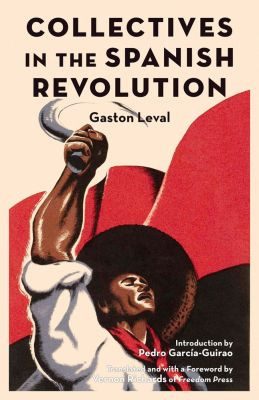
Collectives In The Spanish Revolution

£26.99

|

1 in stock

1 in stock

Gaston Leval”s study brings together two aspects that are generally
difficult to unite–analysis and testimony. He visited the towns and
villages of revolutionary Spain where people had opted to live a
libertarian communist lifestyle almost without precedent in history,
collectivizing the land, factories, and social services. Collectives in the
Spanish Revolution demonstrates clearly that the working class are
perfectly capable of running farms, factories, workshops, and health and
public services without bosses or managers. It proves that anarchist
methods of organizing, with decisions made from the bottom up, can work
effectively in large-scale industry, involving the coordination of many
thousands of workers in many hundreds of places of work across numerous
cities and towns, as well as broad rural areas. Leval”s history of anarchy
in action also gives insight into the creative and constructive power of
ordinary people. The Spanish working class not only kept production going
throughout the war, but in many cases managed to achieve increases in
output. They improved working conditions and created new techniques. They
created, out of nothing, an arms industry without which the war against
fascism could not have been fought. The revolution also showed that without
the competition bred by capitalism, industry can be run in a much more
rational manner. Finally it demonstrated how an organized working class has
the power to transform society.

Collectives In The Spanish Revolution

£26.99

|

1 in stock

1 in stock

Gaston Leval”s study brings together two aspects that are generally
difficult to unite–analysis and testimony. He visited the towns and
villages of revolutionary Spain where people had opted to live a
libertarian communist lifestyle almost without precedent in history,
collectivizing the land, factories, and social services. Collectives in the
Spanish Revolution demonstrates clearly that the working class are
perfectly capable of running farms, factories, workshops, and health and
public services without bosses or managers. It proves that anarchist
methods of organizing, with decisions made from the bottom up, can work
effectively in large-scale industry, involving the coordination of many
thousands of workers in many hundreds of places of work across numerous
cities and towns, as well as broad rural areas. Leval”s history of anarchy
in action also gives insight into the creative and constructive power of
ordinary people. The Spanish working class not only kept production going
throughout the war, but in many cases managed to achieve increases in
output. They improved working conditions and created new techniques. They
created, out of nothing, an arms industry without which the war against
fascism could not have been fought. The revolution also showed that without
the competition bred by capitalism, industry can be run in a much more
rational manner. Finally it demonstrated how an organized working class has
the power to transform society.
Recommended

Freedom

Bookshop

Angel Alley
84b Whitechapel High St
London E1 7QX

Opening hours: 12pm to 6pm

Latest

Freedom Press

something in

particular?

Not everything available in the physical bookshop is currently listed online. If you are searching for a particular book, periodical, or other product please get in touch and we may be able to source it for you